TL;DR
- «Secrets of the Millionaire Mind» rests on one claim: a childhood «money blueprint» sets your wealth like a thermostat, and spoken declarations reset it. The rewriting half has never produced a measurable result in a published trial.
- The famous rebuttal (that positive self-statements make low-self-esteem people feel worse) rests on two small experiments (68 and 116 undergraduates) that failed to replicate in 2020 in samples of about 225 and 237. The verdict on declarations is null, not harmful.
- The visualisation exercises point the wrong way: across four experiments, induced positive fantasies produced less energy than negative or neutral ones.
- The measured channel from parents to children’s wealth is money and assets, not attitudes: the elasticity is 0.37, and income plus asset ownership explains nearly two thirds of it. Measured risk preferences explain very little.
- Verdict: skip it. The six-account allocation is a decent commitment device that a standing bank transfer does better. Everything upstream of it is a sales page for a seminar.
Verdict
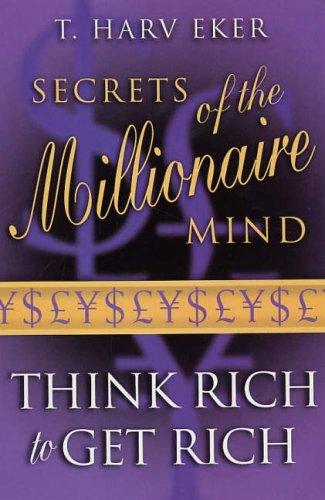
Skip it. This 2005 book runs on a law-of-attraction premise with a self-help chassis bolted on. It contains one workable idea (split income into fixed percentages across separate accounts) and that idea works for reasons the book denies: pre-commitment and defaults, not a change in subconscious belief.
We are scoring the claim, not the author. It is testable in three places — declarations, visualisation, and whether wealth outcomes track childhood programming. The book loses two and gets an unflattering draw on the third.
The claim on trial
Eker’s structure is compact. Each person carries a subconscious «money blueprint» laid down in childhood by verbal programming, modelling and specific incidents. It behaves like a thermostat with a set point, returning you to baseline whatever happens, and is reset by spoken declarations, physical gestures and seventeen «wealth files», after which money follows. The closing gesture, in the book’s own words: «I create the exact level of my financial success! Touch your head and say… I have a millionaire mind!» (quoted in Goodreads). Alongside the declarations the book prescribes a money-management system that splits after-tax income into six fixed-percentage accounts: necessities, financial freedom, play, long-term savings, education and giving.
What the declarations do
The standard critique of affirmations comes from Wood, Perunovic & Lee, Psychological Science, 2009. A survey of 249 undergraduates confirmed people use positive self-statements and believe they work; two experiments then tested them. In the first, 68 students repeated «I am a lovable person», and those with low self-esteem finished with worse mood and state self-esteem than low-self-esteem controls who repeated nothing. A second study with 116 undergraduates reproduced it. Pooled, high-self-esteem participants got a modest benefit (d = 0.66), low-self-esteem participants the reverse (Z = −3.21). Positive self-statements, the authors wrote, «may benefit certain people, but backfire for the very people who “need” them the most».
That finding is now quoted everywhere, including in the earlier version of this page. It has a problem. Flynn & Bordieri, Journal of Contextual Behavioral Science, 2020 ran a direct replication with about 225 participants and a conceptual replication with about 237, both larger than the originals. Neither found any difference between conditions on mood, state self-esteem, goal difficulty or goal completion, and trait self-esteem moderated nothing. The evidence on repeating a sentence about yourself does not say «it harms the vulnerable». It says nobody has shown it does anything.
Separate that from a better-supported technique with a confusingly similar name. Self-affirmation, in research usage, is not repeating a claim about yourself; it is writing briefly about a personally important value, which restores self-integrity under threat (Cohen & Sherman, Annual Review of Psychology, 2014). Its effects are real, small and conditional: pooling 58 classroom studies, Wu, Spreckelsen & Cohen, Journal of Social Issues, 2021 found Hedges’ g = 0.15 for students under identity threat and g = 0.01 for those not. Values writing under threat is not touching your head and asserting you have a millionaire mind.
One study measures Eker’s exact mechanism. Dixon, Hornsey & Hartley, Personality and Social Psychology Bulletin, 2023 built a scale for belief in manifestation (attracting success through positive self-talk, visualisation and symbolic acting-as-if) across three studies totalling 1,023 participants. More than a third endorsed it. Higher scorers were more drawn to risky investments and more likely to have experienced bankruptcy. It is cross-sectional and cannot show the belief caused the bankruptcy, but it is the only dataset linking this mechanism to a financial outcome, and it points the wrong way.
The visualisation problem
The book asks readers to picture the wealthy version of themselves. Gabriele Oettingen’s programme separates two things that feel identical from the inside: expectations (judging a good outcome likely, based on past performance) and fantasies (dwelling in images of the outcome as already achieved). Oettingen & Mayer, Journal of Personality and Social Psychology, 2002 tracked four samples (graduates job-hunting, students with a crush, undergraduates before an exam, hip-replacement patients) for weeks to two years. Positive expectations predicted high effort and success. Positive fantasies predicted the opposite. The pattern is old: in Oettingen & Wadden, Cognitive Therapy and Research, 1991, 25 women went through a year of weekly group weight treatment and the poorest results belonged to those combining pessimistic expectations with positive fantasies.
Kappes & Oettingen, Journal of Experimental Social Psychology, 2011 pinned the mechanism experimentally. Across four experiments, induced positive fantasies produced less energy than fantasies questioning the desired future, than negative fantasies and than neutral ones — and the drop was larger when the need was more pressing. Enjoying the outcome in advance discharges the tension that would have driven the work. The more someone needs the money, the more the exercise costs them.
The tested alternative is not pessimism. It is mental contrasting with implementation intentions: picture the wish, name the internal obstacle, form an if-then plan. Duckworth, Kirby, Gollwitzer & Oettingen, Social Psychological and Personality Science, 2013 randomised 77 fifth-graders to learn either that or a positive-thinking control. The contrasting group improved report card grades (η² = .07), attendance (η² = .05) and conduct (η² = .07). The control condition was doing, in miniature, what this book asks readers to do for a lifetime.
Where wealth comes from
The blueprint story predicts that parental transmission of wealth runs through transmitted attitudes. That has been measured. Charles & Hurst, Journal of Political Economy, 2003 found an age-adjusted elasticity of child wealth to parental wealth of 0.37, before any bequests, then decomposed it: lifetime income and ownership of particular asset types, both strongly similar across generations, jointly explain nearly two thirds. Experimentally measured risk tolerance (the closest proxy for an inherited money attitude) correlated strongly between parents and children yet explained only a small part of the elasticity. Parents transmit earnings capacity and portfolios. The attitude channel is thin.
The rest is geography and timing, neither of which lives in a subconscious. Chetty, Hendren, Kline & Saez, Quarterly Journal of Economics, 2014 used tax records on more than 40 million children: the chance of climbing from the bottom income fifth to the top was 4.4% in Charlotte and 12.9% in San Jose. Chetty & Hendren, Quarterly Journal of Economics, 2018 showed this is causal rather than sorting, using the age at which more than seven million families moved: outcomes improve about 4% per year of childhood spent in the better area. Chetty et al., Science, 2017 found the share of children out-earning their parents at 30 fell from about 90% for the 1940 birth cohort to about 50% for those born in the 1980s. No blueprint changed. The economy did. Inherited money does much of the rest: Federal Reserve economists estimate transfers account for 26% of total US wealth at a 3% real interest rate and 51% at 5%, with the top 10% receiving over half of all transfer dollars in 2016 and the bottom half 8% (Feiveson & Sabelhaus, Federal Reserve Board, 2018).
One strand partly vindicates the thermostat image, and that deserves saying. Hankins, Hoekstra & Skiba, Review of Economics and Statistics, 2011 found that Florida lottery winners of $50,000 to $150,000 had bankruptcy postponed rather than prevented, filing with net assets and unsecured debt similar to small winners. Money does drift back toward a baseline. But Lindqvist, Östling & Cesarini, Review of Economic Studies, 2020 found Swedish large-prize winners had gains in life satisfaction that persisted over a decade without fading. Wealth changed how people rated their lives. The causal arrow runs the other way at least as strongly.
What the book gets right
The six-account system. Splitting income into fixed percentages the moment it arrives is a pre-commitment device, one of the best-evidenced tools in household finance. Thaler & Benartzi, Journal of Political Economy, 2004 asked employees to commit in advance to allocating part of future pay rises to retirement saving: 78% of those offered it joined, 80% stayed through the fourth pay rise, and average saving rates rose from 3.5% to 13.6% over 40 months. Madrian & Shea, Quarterly Journal of Economics, 2001 showed that automatic 401(k) enrolment raised participation sharply, with most people then sticking to the default rate. Structure beats intention. Eker reached a good structure and credited the wrong cause.
Parents also matter: a reader who grew up hearing that money is dirty is not imagining the influence, only mistaking the channel. What the book cannot claim is that reading it will change much. Kaiser, Lusardi, Menkhoff & Urban, Journal of Financial Economics, 2022 pooled 76 randomised trials with over 160,000 participants: financial education moved knowledge by 0.204 standard deviations and behaviour by 0.100. Real, replicable, small.
The seminar behind the book
The book routes readers to a live event. The Millionaire Mind Intensive is a three-day seminar now run by Success Resources, which on its own site calls itself the «world’s no. 1 seminar company» and claims «10 million attendees». Its Singapore event for 15-17 January 2027 lists a standard pass at S$57 against a struck-through S$395 and a VIP pass at S$297 against S$1,295 (Millionaire Mind Intensive, retrieved 10 August 2026). That is a heavily anchored low-cost front end.
What this architecture looks like when a regulator audits it is documented elsewhere. In February 2022 the FTC and the State of Utah obtained judgments exceeding $111 million and lifetime industry bans against the operators of Zurixx, LLC, a real-estate seminar business built on complimentary introductory seminars, then paid seminars at $1,997, then coaching costing tens of thousands, marketed with encouragement to open new credit cards (Federal Trade Commission, 2022). Zurixx is not an Eker company. The FTC action names Cannon, Carlson and Spangler, not Eker; it is cited only as a documented case of a regulator examining this sales structure. We looked for regulatory or court documents naming Eker or the companies behind the Millionaire Mind Intensive and found none we could open — an absence of verified evidence, not a clearance and not an allegation.
The other absence is the interesting one. Searching Europe PMC and Crossref on 10 August 2026 for «Millionaire Mind Intensive», «money blueprint» and «financial thermostat» returned no evaluation of any of them. Untested is not refuted — but a programme claiming ten million attendees and producing zero measured outcomes has chosen that condition.
Who should read it
Someone who has never once allocated income by rule rather than by mood, and who responds to a loud voice telling them to open six accounts. That reader can take the allocation idea above and leave the metaphysics.
Not for you if: you are financially anxious and prone to urgency, because the escalator above is a live hazard; you already automate savings; or you want a mechanism you can check. For the working version of the visualisation exercise, read Oettingen directly. The rest of our self-help book reviews apply the same test.
The other two money books here are «Rich Dad Poor Dad», which at least has an accounting idea in it, and «Happier», where the positive-thinking evidence is examined properly. The 1937 template this genre still copies, declarations included, is checked in Think and Grow Rich.
One thing to try
Replace the declaration with the contrasting version, which has a trial behind it. Write one financial wish for the next twelve months, concrete and within reach — not «wealth», but a number in an account. Write the best outcome of getting it in two sentences and picture it briefly. Then write the main internal obstacle: the habit, the avoidance, the moment it goes wrong. Not the economy, not your parents. Then one if-then sentence: «If [obstacle], then I will [specific action]». That is the sequence tested in the fifth-grade trial above, and the thing it beat was positive thinking.
Then do the part the book got right: set a standing transfer of a fixed percentage of income, dated the day after pay lands, into an account you hold no card for. Structure produced the 3.5% to 13.6% shift. No gesture required.
Get the book
Find «Secrets of the Millionaire Mind» on Amazon — as an Amazon Associate, The Boring Work earns from qualifying purchases (disclosure).
The boring bottom line
«Secrets of the Millionaire Mind» sells a mechanism nobody has measured, using a technique whose most-cited harm finding failed to replicate and whose supposed benefit was never established either. Its visualisation instructions run against four experiments showing that dwelling in the imagined outcome drains the energy that would have driven the work. Parental transmission of wealth is real, at an elasticity of 0.37, and the measurable channels are income and asset ownership, not attitudes.
What survives is an allocation rule that works because it removes a monthly decision, not because it retunes a thermostat. Take the rule. Skip the ritual and the room it is sold in.
When to see a professional
This page is general financial information, not financial advice. We are not financial advisers, we do not know your circumstances, and nothing here recommends buying, selling or holding any asset or product.
For unmanageable debt, insolvency, or a decision about a pension, a mortgage or a large lump sum, speak to a regulated, fee-only financial adviser or a non-profit debt counselling service in your country — not a seminar company that earns money from what you decide. If money is driving persistent anxiety, compulsive spending or an inability to function, that is a clinical matter: a family doctor or a licensed mental health professional is the right first call.
Sources
- Wood JV, Perunovic WQE, Lee JW, «Positive Self-Statements: Power for Some, Peril for Others», Psychological Science 20(7):860-866, 2009
- Flynn MK, Bordieri MJ, «On the failure to replicate past findings regarding positive affirmations and self-esteem», Journal of Contextual Behavioral Science 16:49-61, 2020
- Cohen GL, Sherman DK, «The Psychology of Change: Self-Affirmation and Social Psychological Intervention», Annual Review of Psychology 65:333-371, 2014
- Wu Z, Spreckelsen TF, Cohen GL, «A meta-analysis of the effect of values affirmation on academic achievement», Journal of Social Issues 77(3):702-750, 2021
- Dixon LJ, Hornsey MJ, Hartley N, «”The Secret” to Success? The Psychology of Belief in Manifestation», Personality and Social Psychology Bulletin 51(1):49-65, 2023
- Oettingen G, Mayer D, «The motivating function of thinking about the future: Expectations versus fantasies», Journal of Personality and Social Psychology 83(5):1198-1212, 2002
- Kappes HB, Oettingen G, «Positive fantasies about idealized futures sap energy», Journal of Experimental Social Psychology 47(4):719-729, 2011
- Oettingen G, Wadden TA, «Expectation, fantasy, and weight loss: Is the impact of positive thinking always positive?», Cognitive Therapy and Research 15(2):167-175, 1991
- Duckworth AL, Kirby TA, Gollwitzer A, Oettingen G, «From Fantasy to Action: Mental Contrasting With Implementation Intentions (MCII) Improves Academic Performance in Children», Social Psychological and Personality Science 4(6):745-753, 2013
- Charles KK, Hurst E, «The Correlation of Wealth across Generations», Journal of Political Economy 111(6):1155-1182, 2003
- Chetty R, Hendren N, Kline P, Saez E, «Where is the Land of Opportunity? The Geography of Intergenerational Mobility in the United States», Quarterly Journal of Economics 129(4):1553-1623, 2014
- Chetty R, Hendren N, «The Impacts of Neighborhoods on Intergenerational Mobility I: Childhood Exposure Effects», Quarterly Journal of Economics 133(3):1107-1162, 2018
- Chetty R, Grusky D, Hell M, Hendren N, Manduca R, Narang J, «The fading American dream: Trends in absolute income mobility since 1940», Science 356(6336):398-406, 2017
- Hankins S, Hoekstra M, Skiba PM, «The Ticket to Easy Street? The Financial Consequences of Winning the Lottery», Review of Economics and Statistics 93(3):961-969, 2011
- Lindqvist E, Östling R, Cesarini D, «Long-Run Effects of Lottery Wealth on Psychological Well-Being», Review of Economic Studies 87(6):2703-2726, 2020
- Thaler RH, Benartzi S, «Save More Tomorrow: Using Behavioral Economics to Increase Employee Saving», Journal of Political Economy 112(S1):S164-S187, 2004
- Madrian BC, Shea DF, «The Power of Suggestion: Inertia in 401(k) Participation and Savings Behavior», Quarterly Journal of Economics 116(4):1149-1187, 2001
- Kaiser T, Lusardi A, Menkhoff L, Urban C, «Financial education affects financial knowledge and downstream behaviors», Journal of Financial Economics 145(2):255-272, 2022
- Feiveson L, Sabelhaus J, «How Does Intergenerational Wealth Transmission Affect Wealth Concentration?», Board of Governors of the Federal Reserve System, FEDS Notes, 1 June 2018
- Federal Trade Commission, «Operators of Investment Coaching Scheme Banned from Industry, Ordered to Pay Millions in Redress to Defrauded Consumers» (FTC and Utah v. Zurixx, LLC), 16 February 2022
- Millionaire Mind Intensive Singapore, 15-17 January 2027, Success Resources, retrieved 10 August 2026
- Goodreads, quotation from T. Harv Eker, «Secrets of the Millionaire Mind: Mastering the Inner Game of Wealth»