TL;DR
- The one durable idea in «Rich Dad Poor Dad» is an accounting reframe: sort your possessions by whether they put money in your pocket or take it out. That reframe is free, takes ninety seconds to learn, and does not require the rest of the book.
- The pro-real-estate thesis has genuine academic backing at the asset-class level — housing has historically matched equity returns at lower volatility across 16 countries and 145 years.
- Every layer below that aggregate degrades. Net-of-cost micro data show materially lower returns, and individual houses carry three to four times the volatility of the metro index they sit in.
- The author has publicly declined to say his mentor was real, comparing him to Harry Potter, and the company behind the seminars filed bankruptcy owing roughly $26 million and paid a $23.69 million claim with $100,000.
- Verdict: skip it. One useful metaphor, wrapped in a biography the author walked back, funnelling into a seminar business.
Verdict
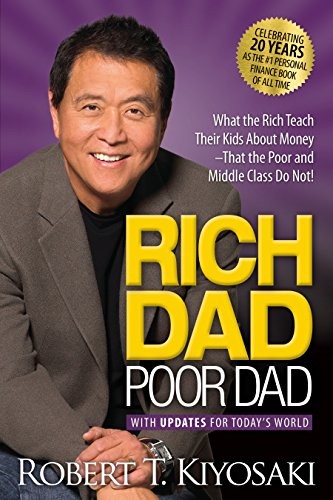
Skip it. «Rich Dad Poor Dad» sold more copies than any other personal finance book in history on the strength of a single accounting metaphor and a mentor story the author later declined to defend as factual. The metaphor is worth knowing. You can get it from this page. The rest of the book is an argument for a specific asset strategy that survives at the level of national averages and falls apart at the level of the individual buyer, taught by an organisation whose own financial history is a matter of public court record.
We are not scoring the man’s character. We are scoring the claim. The claim is testable, and it has been tested — by economic historians with 145 years of data, by a meta-analysis of 168 studies on whether financial education changes behaviour at all, and by a US bankruptcy court in Wyoming. Those three bodies of evidence disagree with each other in interesting ways, which is why this is a «partly» rather than a flat no.
The claim on trial
Stripped of the parables, the book makes one argument: your home is a liability rather than an asset, because it extracts cash from you every month; the route out of wage dependence is redirecting income into things that generate cash flow (chiefly leveraged rental real estate and small business ownership) rather than into a home, a salary, or a passive index fund.
This has three separable parts. First, a definitional claim about what counts as an asset. Second, an empirical claim that real estate and small business beat the alternatives. Third, an operational claim that an ordinary reader can execute this. The book presents all three as one continuous thought. They have wildly different evidence behind them.
What survived
The accounting reframe survives, because it is not an empirical claim at all — it is a definition, and a usefully aggressive one. An owner-occupied home does produce a monthly cash outflow. Calling that outflow what it is, rather than filing the whole property under «asset» and feeling wealthy, is a genuine correction to how most people read their own balance sheet. Accountants will object that the house is still an asset with an offsetting expense stream. They are right, and it does not matter much: the reframe changes behaviour in the direction of asking «what does this thing pay me?», which is the correct question.
The asset-class claim also survives, and more impressively than critics of the book usually concede. Jordà et al., Quarterly Journal of Economics, 2019 assembled total returns across 16 advanced economies from 1870 to 2015 and found residential housing delivered real total returns of 7.05% arithmetic against 6.89% for equities — at roughly half the volatility. On a risk-adjusted basis, housing won. That is the strongest evidence ever produced for a pro-real-estate thesis, and it was produced by economic historians, not by anyone selling a seminar. A book published in 1997 that told readers to look hard at rental property was, at the level of the aggregate asset class, pointed in a defensible direction.
Small business ownership as a wealth route is not disproven either, only riskier than the book’s tone implies, which is a matter for the next section.
What did not survive
The gap between the asset class and the actual asset you can buy is where this collapses.
Take the headline housing return first. Eichholtz et al., Review of Financial Studies, 2021 went to micro-level records (individual Paris properties from 1809 to 1942, Amsterdam from 1900 to 1979) and computed returns net of the costs a real owner pays. Real net total returns came in at 4.2% and 5.0%, which is 0.9 to 2.0 percentage points a year below the Jordà figure. Sharpe ratios were 0.27 and 0.36, not the risk-adjusted dominance the aggregate suggests. And nearly all of the return came from rent, not from price appreciation. That last detail matters, because the fantasy version of this strategy runs on capital gains and refinancing. The historical evidence says the money is in the boring rent cheque.
Then take the specific house. Giacoletti, Review of Financial Studies, 2021 measured idiosyncratic volatility on individual homes in Los Angeles, San Diego and San Francisco: roughly 11-18% a year, against metro-index volatility of about 4-5%. Idiosyncratic risk accounted for up to 60% of one-year capital-gain volatility. You do not buy the index. You buy one building, on one street, and the index return is not what you get. A strategy that concentrates a household’s entire net worth in one or two leveraged properties is taking on three to four times the volatility of the number that made the asset class look good — and leverage multiplies that, in both directions, which the book treats as a feature.
The small business half is weaker still, and for a plainer reason: the book presents business ownership as the obvious escape from a salary and spends no serious time on the failure branch. We wanted to put a survival base rate here and could not verify one from a primary source we could reach, so we are leaving the number out rather than quoting a figure we have not checked.
The deepest problem is the delivery mechanism. Even if every strategic claim in the book were correct, reading about money is a weak lever on doing anything about money. Fernandes et al., Management Science, 2014 meta-analysed 168 papers and found financial education explained about 0.1% of variance in downstream financial behaviour, with effects decaying past 20 months. That finding is often quoted as though it means education is useless, which overstates it. Kaiser et al., Journal of Financial Economics, 2022 pooled 76 randomised controlled trials and over 160,000 participants and found real causal effects — 0.204 standard deviations on knowledge, 0.100 on behaviour. Positive, replicable, and small. The honest reading of both papers together: financial instruction moves behaviour a little, and fades. A book that promises a change of financial mindset is promising something the evidence says books do weakly.
The paper trail
The book’s authority rests on a biography. A wealthy mentor, the «rich dad», taught the young author how money works. Asked directly by SmartMoney in February 2003 whether rich dad was a real person, the answer was: «Is Harry Potter real? Why don’t you let Rich Dad be a myth, like Harry Potter?» That exchange is reproduced in The Motley Fool, 2003. Slate, 2016 notes that no one has independently verified rich dad’s existence, nor the author’s wealth prior to publishing. We are not calling this fraud. We are noting that the evidentiary base for the book’s central teaching device is an unverified story its own author has compared to a children’s fantasy novel.
The business the book funnels into has a harder record. CBC News, 2010 ran a hidden-camera investigation of Rich Dad seminars and found trainers scripting attendees to phone their credit card companies during the session and request $100,000 credit-limit increases, with advanced courses priced between $12,000 and $45,000. Courthouse News Service, 2011 reported a putative class action describing the standard escalator (free workshop, then a $199 seminar, then courses running up to $64,899) taught by instructors with no discernible investing track record.
Then the Learning Annex dispute. Rich Global LLC filed for bankruptcy on August 20, 2012 with roughly $26 million in liabilities against $1.8 million in assets, and a spokesman confirmed the author was not paying from personal assets (ABC News, 2012). Slate notes that Rich Global reported that $1.8 million in assets despite having received some $45 million in royalties between 2007 and 2010. The U.S. Bankruptcy Court for the District of Wyoming, In re Rich Global, LLC, Case No. 12-20834, order of July 16, 2013 approved a trustee settlement giving The Learning Annex an allowed general unsecured claim of $23,690,000.41 — paid out at $100,000. A creditor owed $23.69 million recovered four tenths of one percent. That is the primary document, not a blog summary of it.
One piece of context on the business model, and we are stating its limits explicitly. In 2022 the FTC and the State of Utah obtained judgments exceeding $111 million and lifetime industry bans against the operators of Zurixx, LLC, a real-estate seminar company running the same free-workshop-to-paid-coaching funnel (Federal Trade Commission, 2022). Zurixx is not a Kiyosaki company. It is evidence about what regulators have found when they audit this sales structure — not evidence about Rich Dad. We include it because the structure is the thing under examination, and it is the only case in this file where a court has ruled on the funnel itself.
What nobody has is outcome data. Not for Rich Dad seminars, not for the industry. No paid real-estate seminar operator has ever published auditable figures on what happened to attendees’ net worth. The absence is the finding.
This page is financial information, not financial advice. We are not financial advisers, we do not know your circumstances, and nothing here is a recommendation to buy, sell, or hold anything.
Who should read it
Someone who has never once separated «things that pay me» from «things I pay for» and needs a vivid, memorable, slightly wrong story to make that distinction stick. If that is you, borrow the book, read the first sixty pages, and stop.
Not for you if: you already understand cash flow versus appreciation; you are looking for an executable plan, because there isn’t one in these pages; or you are financially anxious and susceptible to urgency, in which case the funnel documented above is a live hazard rather than a historical curiosity. Anyone considering the paid courses should read the CBC and Courthouse News material first, then decide.
Readers who want the same asset-class conclusions with the arithmetic attached will do better with the Jordà and Eichholtz papers themselves, both of which are readable, or with our other reviewed titles.
The two other money books here fail in different places: «The Rules of Wealth» on whether habits transmit wealth, and «Secrets of the Millionaire Mind» on whether declarations change anything at all. For a money book whose behavioural claims mostly survive large datasets, see The Psychology of Money, checked.
One thing to try
Take the accounting insight and leave the method behind. Open a blank page and list every significant thing you own or pay for. Beside each, write the actual monthly number it puts into or takes out of your account — not its market value, not what you hope it will be worth, the cash. Your home goes on the outflow side with mortgage, tax, insurance and maintenance. Your salary is an inflow that stops when you do. Total both columns.
That is the whole exercise, and it is the entire transferable content of the book. What you do next is a separate decision that the evidence above does not settle for you — the aggregate case for housing is real, the net-of-cost and single-property numbers are much less flattering, and neither fact tells you what to buy. The point is that you now have a balance sheet built on cash flow rather than on sentiment, which is the thing the book got right, obtained without paying $199 for a seminar.
Get the book
Find «Rich Dad Poor Dad» on Amazon — as an Amazon Associate, The Boring Work earns from qualifying purchases (disclosure).
For rules about money that predate the genre by several centuries, see the platinum rules of doing business.
The boring bottom line
«Rich Dad Poor Dad» is a book whose best idea is a definition and whose worst idea is that reading it constitutes a plan. The asset-class argument at its core has more academic support than its critics admit and less operational validity than its fans believe — housing beat equities on a risk-adjusted basis across 145 years of national aggregates, and the individual house you can afford carries three to four times the index volatility, before leverage. The teaching device is a mentor the author compared to Harry Potter. The commercial apparatus behind it left a $23.69 million court-allowed claim satisfied with $100,000.
Take the ninety-second reframe. Skip the 200 pages and the escalator behind them.
Sources
- Jordà Ò, Knoll K, Kuvshinov D, Schularick M, Taylor AM, «The Rate of Return on Everything, 1870-2015», Quarterly Journal of Economics 134(3):1225-1298, 2019
- Eichholtz P, Korevaar M, Lindenthal T, Tallec R, «The Total Return and Risk to Residential Real Estate», Review of Financial Studies 34(8):3608-3646, 2021
- Giacoletti M, «Idiosyncratic Risk in Housing Markets», Review of Financial Studies 34(8):3695-3741, 2021
- Fernandes D, Lynch JG, Netemeyer RG, «Financial Literacy, Financial Education, and Downstream Financial Behaviors», Management Science 60(8):1861-1883, 2014
- Kaiser T, Lusardi A, Menkhoff L, Urban C, «Financial education affects financial knowledge and downstream behaviors», Journal of Financial Economics 145(2):255-272, 2022
- U.S. Bankruptcy Court, District of Wyoming, In re Rich Global, LLC, Case No. 12-20834, order of July 16, 2013
- ABC News, «’Rich Dad, Poor Dad’ Author Files for Bankruptcy for His Company», 2012
- The Motley Fool, «’Rich Dad’ Just a Fad?», 2003
- Slate, Helaine Olen, 2016
- CBC News / Marketplace, «Rich Dad seminars deceptive», 2010
- Courthouse News Service, «Rich Dad, My Foot, Class Claims», 2011
- Federal Trade Commission, FTC and Utah v. Zurixx, LLC, 2022