TL;DR
- The claim is not «meditation is good». It is that Transcendental Meditation specifically takes you deeper, that deeper means better ideas, and that research proves it. The research does not separate TM from any other form of sitting quietly.
- TM’s apparent advantage is a publishing artefact. Across 163 studies TM averaged r = .32 against mindfulness meditation’s .24 — but most TM studies came from the movement’s own edited volumes, and counting journal articles only, TM is .27 (36 studies), mindfulness .26 (46), everything else .26 (43) (Sedlmeier et al., Psychological Bulletin, 2012).
- Against an active comparator, TM does close to nothing for anxiety (SMD 0.06), depression (−0.12) or perceived stress (0.04) across 8 randomised trials and 830 participants. Against no treatment it looks strong (Rees et al., Cochrane Database of Systematic Reviews, 2024).
- The creativity literature runs the other way from the book: meditation helps convergent thinking (d = 0.47) about twice as much as divergent thinking (d = 0.25) (Hughes et al., Psychonomic Bulletin & Review, 2023).
- Lynch never mentions harms. A review of 83 studies and 6,703 meditators found adverse events in 65% of studies and a pooled prevalence of 8.3% — most often anxiety, depression and cognitive anomalies (Farias et al., Acta Psychiatrica Scandinavica, 2020).
Verdict
Read our notes instead. «Catching the Big Fish» is short, large-typed and charming, and Lynch is honest that he is a filmmaker, not a scientist. But it is also a recruitment document for one branded, paid technique, and it gestures at «scientific research» as the reason to choose that technique over any other. That gesture is the checkable part, and it does not survive.
Everything in the book that works (sit still twice a day, stop grinding at the problem, let ideas arrive) works without a mantra you paid for. See our other reviews of self-help books for the same triage applied elsewhere.
The claim on trial
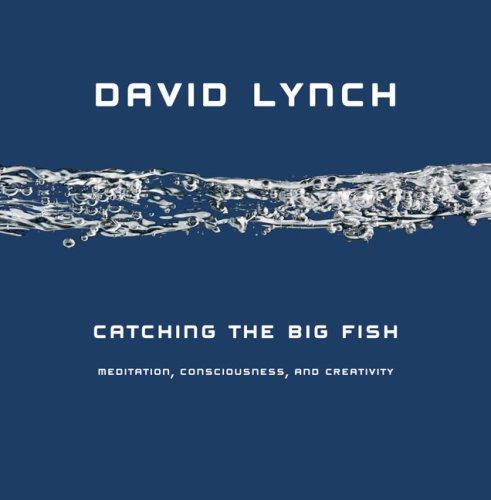
Lynch’s metaphor is the title. Ideas are fish; shallow water holds small fish; consciousness can be expanded so you fish deeper and catch bigger ones. The vehicle is Transcendental Meditation specifically, taught by certified instructors for a fee, using a mantra assigned to you. The book presents this as an empirical matter, not a preference.
So the claim has three parts: that TM does something distinct from other quiet-sitting practices; that the distinct something raises creative output; and that research supports both. Only the first has been tested seriously, and it fails.
The independence problem
TM research has a structural feature most fields do not: a large share of it is produced by the organisation that sells the course.
The cleanest statement of this is old and blunt. Reviewing every randomised trial of TM for blood pressure, Canter and Ernst, Journal of Hypertension, 2004 found six trials, five evaluable, and wrote that none of the five was conducted by authors without an affiliation to the TM organisation. The evidence was too weak to say whether TM lowers blood pressure at all.
The same pair had already done the cognitive question, which is closer to Lynch’s. Canter and Ernst, Wiener klinische Wochenschrift, 2003 screened 107 papers on TM and cognitive function and found 10 randomised controlled trials. Four reported large positive effects; four were completely negative; two were largely negative. The split was not random. All four positive trials recruited participants already favourably disposed towards TM and used passive controls; the other six recruited people with no particular interest, and five used structured controls. The authors read the positive results as an expectation effect.
The pattern persists. An independent overview of eight systematic reviews of TM and blood pressure noted that two came from a TM-related institution, scored the reviews at a mean of 5.75 out of 11 on AMSTAR, and asked for trials «conducted by independent researchers» (Ooi et al., Complementary Therapies in Medicine, 2017). Our own count on 11 August 2026: of 62 Europe PMC records published since 2015 with «transcendental meditation» in the title, 57 carried affiliation data, and 26 of those listed at least one author at Maharishi International University or an affiliated TM-movement institute. None of this implies fraud; it describes a field where roughly half the output comes from the vendor.
What this does to the numbers is best shown by a meta-analysis that was not about TM at all. Sedlmeier et al., Psychological Bulletin, 2012 pooled 163 studies of meditation. At first glance TM won: mean weighted effect r = .32 across 63 studies, against .24 for mindfulness and .27 for other approaches. Then they noticed most TM studies came from book chapters rather than journals (the movement’s own collected-papers volumes) and those 28 chapters averaged r = .38. Restricting the comparison to peer-reviewed articles collapsed the difference: TM .27, mindfulness .26, other approaches .26. The TM funnel plot was still upwardly skewed, so even .27 is generous. The brand advantage lives in the publication channel.
TM versus doing something else
The decisive design is TM against an active control — another activity of the same duration and plausibility. Here the evidence is now good, and unkind.
The current Cochrane review of meditation for cardiovascular prevention pooled 81 randomised trials and 6,971 participants across four comparisons (Rees et al., Cochrane Database of Systematic Reviews, 2024). TM against active comparators: 8 trials, 830 participants. Anxiety, SMD 0.06 (95% CI −0.22 to 0.33). Depression, −0.12 (−0.31 to 0.07). Perceived stress, 0.04 (−0.49 to 0.57). Systolic blood pressure fell 2.33 mmHg. TM against non-active comparators — waiting lists, usual care: 2 trials, 186 participants, anxiety SMD −0.71, depression −0.48. TM beats nothing. It does not beat something.
The AHRQ-commissioned meta-analysis found the same shape a decade earlier: 47 trials with active controls, 3,515 participants, insufficient evidence that mantra meditation programmes (the TM family) improved any outcome examined, and «no evidence that meditation programs were better than any active treatment» (Goyal et al., JAMA Internal Medicine, 2014). Cochrane’s earlier attempt at TM alone found four trials and 430 participants, all short, all at serious risk of bias, and declined to pool them (Hartley et al., Cochrane Database of Systematic Reviews, 2014); it was withdrawn in 2017 rather than updated. Cochrane’s review of meditation for anxiety disorders found two eligible trials in the whole literature, in one of which TM reduced symptoms comparably to biofeedback and relaxation therapy (Krisanaprakornkit et al., Cochrane Database of Systematic Reviews, 2006). Comparable is the whole finding.
The creativity claim
This is what the book is about, and it is where the evidence is thinnest.
Start with what exists. There is real work distinguishing focused-attention from open-monitoring meditation and predicting different effects on convergent versus divergent thinking. The most-cited experiment is Colzato et al., Frontiers in Psychology, 2012: after open-monitoring practice, experienced meditators produced more fluent, flexible and original responses on the Alternate Uses Task, with no effect on the Remote Associates Task. Three sessions, within-subjects, 19 participants. The same laboratory’s 2014 follow-up on convergent and divergent thinking was retracted in February 2025.
The pooled picture reverses the book’s story. Hughes et al., Psychonomic Bulletin & Review, 2023 ran two meta-analyses (20 controlled-group and 17 pretest-posttest studies) and found d = 0.42 (95% CI 0.29 to 0.54) in the controlled sample. Split by task, meditation helped convergent thinking (d = 0.47) roughly twice as much as divergent thinking (d = 0.25). Split by control: d = 1.01 against waiting lists, 0.47 against active controls, 0.24 against no-treatment controls. The thinking it helps most is the narrowing kind, not the expansive kind Lynch describes.
Then the gap nobody in this literature closes. Divergent-thinking scores are not films. Pooling 27 studies with 47,197 participants, divergent-thinking test scores correlate with actual creative achievement at r = .216 — better than IQ’s .167, and still under 5% of shared variance (Kim, The Journal of Creative Behavior, 2008). A d of 0.25 on the Alternate Uses Task, transmitted through a correlation of .216, is not a mechanism for «Mulholland Drive».
On TM and creativity specifically, a checked negative. We searched Europe PMC (which indexes PubMed, PubMed Central and preprints) on 11 August 2026 for «transcendental meditation» with creativity, divergent thinking, ideation and innovation terms. Of 169 records, none was a randomised trial of TM with a creativity outcome. A 2010 review records the split: TM researchers reported enhanced creativity, other researchers found no relationship (Hussain and Bhushan, International Journal of Psychology and Psychological Therapy, 2010). Untested is not refuted. But the book’s central promise has, as far as we can find, never been put to a controlled test by anyone who did not sell the course.
What Lynch does not mention
The book contains no adverse effects, no contraindications and no warning of any kind. This is a real omission, not a stylistic one.
Farias et al., Acta Psychiatrica Scandinavica, 2020 screened 6,742 citations and analysed 83 studies covering 6,703 people who had meditated. Fifty-five of the 83 (65%) reported at least one adverse event. Pooled prevalence was 8.3%, rising to 33.2% in observational studies and falling to 3.7% in experimental ones. The commonest were anxiety (33% of the studies reporting harms), depression (27%) and cognitive anomalies (25%); suicidal behaviours appeared in 11%. These can occur in people with no previous history of mental health problems.
An 8.3% pooled rate is not an argument against meditating. It is an argument for a book that mentions it — especially one aimed at people in creative distress, backed by a foundation that puts the practice into schools.
What the book gets right
Several things, and they deserve the same citation standard.
TM does lower blood pressure relative to doing nothing. A meta-analysis of 12 trials and 996 participants found reductions of 4.26 mmHg systolic (95% CI −6.06 to −2.23) and 2.33 mmHg diastolic (−3.70 to −0.97), with bias risks flagged in the primary studies (Bai et al., Journal of Human Hypertension, 2015). Roughly 4 over 2 mmHg is comparable to a weight-loss diet or exercise. Modest and real.
Meditation of some kind also helps mood at the level Lynch describes: moderate evidence of improved anxiety (effect size 0.38 at eight weeks) and depression (0.30) in the AHRQ meta-analysis. Lynch’s account of what practice feels like (the fatigue lifting, the anger becoming less useful, the willingness to sit with a problem instead of forcing it) fairly describes what many people report.
And an independent evaluation of the David Lynch Foundation’s school work does exist. Conti et al., Frontiers in Psychology, 2022 (economists and psychologists at UCL, UCD and Westminster, on a UCL Grand Challenges grant, declaring no commercial relationships) ran Quiet Time in one London primary school (89 pupils) and two Irish schools (100 pupils). It was explicitly a feasibility study, not an efficacy trial: quasi-experimental, with the London comparison group using the Headspace app. Across a large battery of outcomes it found high acceptability, uneven implementation fidelity and suggestive working-memory gains. The authors say it should inform a larger randomised trial; as of 11 August 2026 we found no published results from one.
Who should read it
People who like David Lynch. That is not a joke and not a small group. The chapters on «Eraserhead», on the sound of a room, on getting an idea down before it evaporates, are the work of someone who spent fifty years paying attention to how films get made. Read it as a director’s notebook and it is delightful.
Skip it if you are choosing between meditation techniques, or deciding whether to pay for instruction. The book has nothing that helps with either question, and it presents itself as though it does.
For the tradition the practice comes from, read «The Dhammapada»; for another book that borrows altered states to explain productivity, «Making Time».
One thing to try
Do the schedule, drop the brand. Twenty minutes, twice a day, at fixed times — that structure is the one thing every arm of the TM evidence shares with every arm of the mindfulness evidence, and the trials cannot tell them apart. Pick any technique you will repeat: breath focus, a repeated word, an instruction to notice whatever arrives. The meta-analytic effect sizes are the same within measurement error.
Then separate the book’s two claims. Sitting is one intervention. Leaving a stuck problem alone and returning to it is a different one, and it is the part of Lynch’s account with most to do with how ideas surface. Both run without a mantra ceremony, and either can be dropped when it stops earning its twenty minutes.
Get the book
Find «Catching the Big Fish» on Amazon — as an Amazon Associate, The Boring Work earns from qualifying purchases (disclosure).
The boring bottom line
«Catching the Big Fish» makes a brand claim dressed as an empirical one. Strip the branding and the evidence is duller: sitting still helps some people, about as much as other quiet activities of the same length, by an amount that shrinks as the control condition improves. TM’s superiority over mindfulness disappears once you exclude the movement’s own book chapters. TM’s benefit disappears once the comparison group does anything at all. The creativity story rests on a 19-person experiment, a retracted follow-up from the same laboratory, and a pooled effect that favours the wrong kind of thinking — measured with tests that predict real creative achievement at r = .216.
Lynch is describing, honestly, something that helped him and reaching for the nearest authority to explain why. The authority is not there. The practice, stripped of the mantra and the fee, may still be worth twenty minutes of your morning.
When to see a professional
This is general information about research, not medical advice. Meditation is not risk-free: the pooled adverse-event rate above is 8.3%, including in people with no psychiatric history. If a practice reliably makes you more anxious, more detached from your surroundings or worse at sleeping, stop and talk to a GP or clinical psychologist rather than pushing through. With a history of psychosis, dissociation, severe depression or trauma, discuss intensive or retreat-style practice with a psychiatrist or clinical psychologist first. Meditation is not a substitute for treating high blood pressure — do not change any prescribed treatment on the strength of a book, this page included. If you are in crisis, contact your local emergency or crisis line now.
Sources
- Sedlmeier P, Eberth J, Schwarz M, Zimmermann D, Haarig F, Jaeger S, Kunze S. The psychological effects of meditation: a meta-analysis. Psychological Bulletin, 2012 — 163 studies; TM r = .32 vs mindfulness .24 overall, but .27 vs .26 once book chapters are excluded.
- Rees K, Takeda A, Court R, Kudrna L, Hartley L, Ernst E. Meditation for the primary and secondary prevention of cardiovascular disease. Cochrane Database of Systematic Reviews, 2024 — 81 RCTs, 6,971 participants; TM vs active comparators showed little or no effect on anxiety, depression or stress.
- Goyal M, Singh S, Sibinga EMS, et al. Meditation programs for psychological stress and well-being: a systematic review and meta-analysis. JAMA Internal Medicine, 2014 — 47 trials, 3,515 participants; insufficient evidence that mantra meditation programmes improve any outcome, and no evidence meditation beats active treatment.
- Canter PH, Ernst E. Insufficient evidence to conclude whether or not Transcendental Meditation decreases blood pressure. Journal of Hypertension, 2004 — none of the five evaluable randomised trials was conducted by authors independent of the TM organisation.
- Canter PH, Ernst E. The cumulative effects of Transcendental Meditation on cognitive function — a systematic review of randomised controlled trials. Wiener klinische Wochenschrift, 2003 — 10 RCTs; all four positive trials used TM-favourable recruitment and passive controls.
- Ooi SL, Giovino M, Pak SC. Transcendental meditation for lowering blood pressure: an overview of systematic reviews and meta-analyses. Complementary Therapies in Medicine, 2017 — 8 reviews, mean AMSTAR 5.75/11, roughly 4/2 mmHg, with a call for trials by independent researchers.
- Hartley L, Mavrodaris A, Flowers N, Ernst E, Rees K. Transcendental meditation for the primary prevention of cardiovascular disease. Cochrane Database of Systematic Reviews, 2014 — 4 trials, 430 participants, all small, short and at serious risk of bias; no conclusions possible.
- Hartley L, Mavrodaris A, Flowers N, Ernst E, Rees K. WITHDRAWN: Transcendental meditation for the primary prevention of cardiovascular disease. Cochrane Database of Systematic Reviews, 2017 — the 2014 review was withdrawn rather than updated.
- Krisanaprakornkit T, Sriraj W, Piyavhatkul N, Laopaiboon M. Meditation therapy for anxiety disorders. Cochrane Database of Systematic Reviews, 2006 — only two eligible RCTs; TM performed comparably to biofeedback and relaxation therapy.
- Bai Z, Chang J, Chen C, Li P, Yang K, Chi I. Investigating the effect of transcendental meditation on blood pressure: a systematic review and meta-analysis. Journal of Human Hypertension, 2015 — 12 studies, 996 participants; −4.26 mmHg systolic and −2.33 mmHg diastolic versus control.
- Colzato LS, Ozturk A, Hommel B. Meditate to create: the impact of focused-attention and open-monitoring training on convergent and divergent thinking. Frontiers in Psychology, 2012 — 19 experienced meditators; open monitoring raised Alternate Uses Task scores, no effect on the Remote Associates Task.
- Colzato LS, Szapora A, Lippelt D, Hommel B. Retraction note: prior meditation practice modulates performance and strategy use in convergent- and divergent-thinking problems. Mindfulness, 2025 — the 2014 follow-up study was retracted on 19 February 2025.
- Hughes Z, Ball LJ, Richardson C, Judge J. A meta-analytical review of the impact of mindfulness on creativity. Psychonomic Bulletin & Review, 2023 — d = 0.42 overall; convergent thinking d = 0.47 vs divergent d = 0.25; waiting-list controls d = 1.01 vs active controls 0.47.
- Kim KH. Meta-analyses of the relationship of creative achievement to both IQ and divergent thinking test scores. The Journal of Creative Behavior, 2008 — 27 studies, 47,197 participants; divergent-thinking scores correlate with creative achievement at r = .216.
- Farias M, Maraldi E, Wallenkampf KC, Lucchetti G. Adverse events in meditation practices and meditation-based therapies: a systematic review. Acta Psychiatrica Scandinavica, 2020 — 83 studies, 6,703 participants; adverse events in 65% of studies, pooled prevalence 8.3%.
- Conti G, Doyle O, Fearon P, Oppedisano V. A demonstration study of the Quiet Time Transcendental Meditation program. Frontiers in Psychology, 2022 — independent feasibility study, 89 UK and 100 Irish pupils, quasi-experimental, suggestive working-memory effects only.
- Hussain D, Bhushan B. Psychology of meditation and health: present status and future directions. International Journal of Psychology and Psychological Therapy, 2010 — records that TM researchers reported enhanced creativity while other researchers found no relationship.