TL;DR
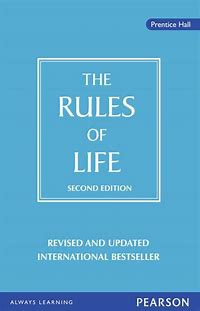
- «The Rules of Life» (2005) sets out roughly 106 short behavioural rules and offers no evidence for any of them. Crossref and Europe PMC searches on 10 August 2026 for any study testing Templar’s rule set returned zero results. Untested is not refuted — but twenty years have produced no trial.
- Rule 1, «Keep it under your hat», is the rule the research contradicts most directly. Habitual concealment of feeling tracks lower social support, lower life satisfaction and more depressive symptoms across samples totalling over 1,400 people.
- Rule 13, «No fear, no surprise, no hesitation, no doubt», is the folk version of power posing. The 2010 study had 42 participants; a 200-person replication found the felt-power effect and nothing else; a p-curve of 33 studies came out flat. The first author now writes «I do not believe that “power pose” effects are real».
- «Be positive» splits in two. Optimism as an expectation tracks a 35% lower rate of cardiovascular events across 229,391 people. Positive fantasy predicts less effort and worse results. The research has separated the two since 2002; Templar never does.
- Three rules do survive: accept what is done, be kind, notice what is good. Their real effects run from d = 0.14 to d = 0.45 — genuine and modest. Nothing in the book tells you which three.
Verdict
Skip it. Confidence: moderate to high.
This is not a bad-faith book. Richard Templar wrote calm, unpretentious prose, and a reader who already knows the research would nod along to perhaps a fifth of it. The format is the problem. One hundred and six numbered rules, presented with identical confidence and no supporting evidence, leave no way to separate the rules that hold up from the rules that thirty years of data contradict. The two most memorable (keep your troubles private, project unshakeable confidence) are the two the evidence argues against hardest.
Our earlier note on this page called the book «a reminder, not a discovery». That was too generous. A reminder that includes wrong instructions is not a neutral object.
The claim on trial
Stated so it can be checked: life outcomes are governed by a set of roughly one hundred short behavioural rules, and a person who follows them will end up happier, more successful and better liked than one who does not.
Each component is separately testable. Some rules have been tested directly; some have been tested in the form of the construct they describe. The package as a whole never has. On 10 August 2026 we searched Crossref for «Templar» with «rules of life», and Europe PMC for the same terms: zero relevant records, and no trial in which one group read the book and another did not. That applies to nearly every mass-market rule book, and is worth saying plainly.
Rule 13 and the collapse of acting as if
Rule 13 is a samurai maxim repurposed as posture advice: carry yourself as the person you want to be and the inside will catch up. This is the most heavily tested idea in the book, because it is also the idea behind power posing.
The founding study is Carney, Cuddy and Yap, Psychological Science, 2010. Forty-two participants held either expansive or contracted postures for two minutes. The paper reported higher testosterone, lower cortisol, more risk-taking and more felt power in the expansive group, and became one of the most-viewed TED talks ever given. What happened to each of those results under replication is in does power posing work.
Then Ranehill et al., Psychological Science, 2015 ran the same manipulation on 200 people. Felt power replicated — a mean difference of 0.245, p = .017. Nothing else did: testosterone p = .162, cortisol p = .272, risk-taking in the gain domain p = .215. The subjective effect survived; every downstream claim did not. Simmons and Simonsohn, Psychological Science, 2017 then p-curved the 33 studies the power-posing literature itself cited as supporting evidence. A real effect produces a right-skewed distribution of p-values. This one was flat, which is what you get when there is no effect and researchers have flexibility in analysis.
The unusual part is what the first author did next. In a statement on her Berkeley faculty page, Dana Carney wrote: «I do not believe that “power pose” effects are real.» She listed the analytic decisions behind the 2010 paper — participants run in batches with effects checked at 25, then 10, then 7, then 5; the smaller of two p-values reported for the risk measure (.05 rather than .052); self-report items chosen because they «worked» — and told NPR in October 2016 the same thing.
Be fair to the other side. Cuddy, Schultz and Fosse, Psychological Science, 2018 p-curved a broader set of postural-feedback studies and reported clear evidential value for effects on self-reported feelings. And the largest synthesis, Elkjær et al., Perspectives on Psychological Science, 2022 (73 studies from 5,819 records) found robust differences between expansive and contracted displays. But it put the effect where the advice does not: contracted versus neutral posture gave Hedges’s g = 0.45, expansive versus neutral gave g = 0.06. The gain comes from not slumping, not from the pose. Templar’s version has no support at all.
Rule 1 is the one that is actively wrong
The book opens with «Keep it under your hat» and returns to it: Rule 81 tells you to be up around the people you love rather than bring your troubles to them. As social manners this is defensible. As a standing policy it runs against one of the best-evidenced findings in health psychology.
Habitual concealment has a name and a measure. Gross and John, Journal of Personality and Social Psychology, 2003 validated the Emotion Regulation Questionnaire across samples totalling more than 1,400 undergraduates plus peer ratings of 49 targets. People high in expressive suppression reported less emotional support (β = −.48) and instrumental support (β = −.37), less closeness in peer-rated relationships (β = −.25), lower life satisfaction (β = −.34), lower self-esteem (β = −.39) and high inauthenticity (β = .47) — they knew the gap between what they felt and what they showed. Suppression did not spare them the feeling. It cost them the relationships.
Relationships are not a soft outcome. Holt-Lunstad, Smith and Layton, PLoS Medicine, 2010 pooled 148 studies and 308,849 participants: stronger social relationships were associated with a 50% increased likelihood of survival (OR = 1.50, 95% CI 1.42–1.59), strongest for complex measures of social integration (OR = 1.91). Their follow-up, Holt-Lunstad et al., Perspectives on Psychological Science, 2015, put loneliness at OR = 1.26 and social isolation at OR = 1.29 for mortality after adjustment.
The fair caveat: talking about your problems is not automatically medicine. Frattaroli, Psychological Bulletin, 2006 pooled 146 randomised experimental-disclosure studies and found an average effect of r = .075 — real, and very small. And Webb, Miles and Sheeran, Psychological Bulletin, 2012, across 306 experimental comparisons, found that suppressing the outward expression of an emotion in the moment works as a short-term tactic (d = 0.32), while suppressing the experience does not (d = −0.04). A rule saying «do not weep at the sales meeting» is fine. Templar’s rule is broader, and the broad version predicts thinner support and lower satisfaction.
«Be positive» splits into two different things
Rule 91 is «Hang out with positive people», and an instruction to choose your attitude runs through the happiness section. Half of this is supported and half is backwards, and the book does not know which half is which.
Optimism as an expectation (judging a good outcome likely) has decent observational support. Rozanski et al., JAMA Network Open, 2019 pooled 15 cohort studies and 229,391 participants over a mean 13.8 years: optimism was associated with a relative risk of 0.65 for cardiovascular events and 0.86 for all-cause mortality. Heterogeneity was high (I² = 87.4%), and these are cohorts, not experiments — optimists fare better, which is not the same as deciding to be one changing anything.
Optimism as fantasy (enjoying mental images of the good outcome) goes the other way. Oettingen and Mayer, Journal of Personality and Social Psychology, 2002 tracked four groups (graduates looking for work, students with a crush, undergraduates before an exam, hip-replacement patients) for weeks to two years. Positive expectations predicted more effort and better outcomes. Positive fantasies predicted the reverse. Kappes and Oettingen, Journal of Experimental Social Psychology, 2011 showed the mechanism experimentally across four studies: positive fantasy lowered energy on physiological and behavioural measures, most sharply when the need was most pressing. Imagining the goal achieved partly discharges the motivation to achieve it.
The tested alternative holds both halves at once. Mental contrasting with implementation intentions (wish, outcome, obstacle, plan) was pooled in Wang, Wang and Gai, Frontiers in Psychology, 2021: 24 effect sizes, 15,907 participants, g = 0.336 for goal attainment, stronger when delivered by a person (g = 0.465) than by a document (g = 0.277), with the authors flagging some publication bias. Five minutes better spent than «be positive».
Taking responsibility, and where it turns on you
The spine of the book is that your life is yours to run — Rule 12, «Be your own adviser», and a general refusal to let readers blame circumstance. In the literature this is internal locus of control, and at work it looks good. Ng, Sorensen and Eby, Journal of Organizational Behavior, 2006 found internal locus positively associated with well-being, job satisfaction, commitment, motivation, performance and career success. Wang, Bowling and Eschleman, Journal of Applied Psychology, 2010 sharpened it across 184 samples: work-specific locus of control correlated with job satisfaction at r = .34 (k = 69, N = 16,348) against r = .22 for general locus, and with burnout at r = −.38 against r = −.07. Both are correlational — success can teach you that you have control.
The failure mode appears when the same reflex is applied to bad events. Sweeney, Anderson and Bailey, Journal of Personality and Social Psychology, 1986 meta-analysed 104 studies and nearly 15,000 participants: attributing negative events to internal, stable and global causes was reliably associated with depression, whether participants were psychiatric patients or students. The distinction that saves the rule is between «I made a bad decision» and «I am the kind of person this happens to». Roesch and Weiner, Journal of Psychosomatic Research, 2001, pooling 27 studies of people with physical illness, found internal, unstable and controllable attributions linked to better adjustment through approach coping, while stable and uncontrollable ones linked to avoidance and worse adjustment. Templar never draws that line, and it decides whether the rule helps or harms.
Where Templar is right
Three rules survive contact with the evidence, and they get the same citation standard as the criticisms.
- Rule 3, «Accept what is done is done», is reappraisal. In Webb, Miles and Sheeran, Psychological Bulletin, 2012, cognitive change was the most effective family tested (d = 0.36 overall), with reappraising the situation at d = 0.36 and perspective taking at d = 0.45, against d = 0.00 for attentional deployment.
- Kindness without scorekeeping holds up. Curry et al., Journal of Experimental Social Psychology, 2018 pooled 27 studies and 4,045 participants: acts of kindness raised the actor’s well-being by δ = 0.28 (95% CI 0.16–0.41), roughly 0.6 points on a 0–10 happiness scale, with no funnel-plot asymmetry. Average cell size was 79, which is small.
- Deliberate gratitude works, modestly. Emmons and McCullough, Journal of Personality and Social Psychology, 2003 ran three studies (N = 192, N = 157, and N = 65 adults with neuromuscular disease). Only the third moved both positive and negative affect; Study 1 did not shift global affect at all. Davis et al., Journal of Counseling Psychology, 2016 found gratitude interventions beat an activity-matched comparison at d = 0.14 and did no better than a psychologically active one (d = −0.03).
That is the honest yield: three good rules with small, replicated effects, undifferentiated among a hundred others.
Who should read it
Read it if you want a calm book of one-page essays to keep by the bed, you are not going to treat it as instructions, and you already know enough psychology to flag Rules 1, 13 and 81 as wrong.
Do not read it as a manual. For the same territory with evidence attached, go to the primary papers above or to other titles in our book reviews. The money-and-work version of Templar’s method is a separate book with a separate claim, reviewed separately.
The companion volume is «The Rules of Wealth», which fails in a different literature, and «The Power of Focus» is the same rule-list format with a famous fake statistic attached.
One thing to try
Reverse Rule 1 for two weeks. Instead of keeping it under your hat, pick one person and tell them one specific thing you are struggling with — not a general complaint, one concrete problem, once a week. Writing it in a diary instead buys you r = .075. The relationship itself is worth an OR of 1.50 on survival. The transfer is from the second, not the first.
To fix the positivity rule, run WOOP on a goal you have been putting off: name the wish, picture the best outcome, name the single internal obstacle, then write «if [obstacle], then I will [action]». That is the procedure with g = 0.336 behind it, and it takes five minutes.
Get the book
Find «The Rules of Life» on Amazon — as an Amazon Associate, The Boring Work earns from qualifying purchases (disclosure).
The boring bottom line
«The Rules of Life» is a hundred assertions with the confidence of findings and the evidence of none. Where the rules match the research (accept what you cannot change, be kind, notice what is good) the effects run from d = 0.14 to d = 0.45: worth having, nothing like the promise on the cover. Where they contradict it (hide your troubles, project total certainty) they point readers at the behaviour most likely to cost them support, and at an effect its own first author has publicly disowned. A rule book that cannot tell you which of its rules survived testing is not a code for living. It is a list.
When to see a professional
This page is general information about published research, not medical or mental-health advice. Persistent low mood, hopelessness, a habit of blaming yourself for everything that goes wrong, or the sense that you cannot talk to anyone are reasons to see a doctor or a licensed psychologist rather than to adopt a rule from a book. Cognitive behavioural therapy targets the attribution patterns described above and is delivered by trained clinicians. If you are in crisis, contact your local emergency service or a crisis line in your country.
Sources
- Carney, Cuddy and Yap, Psychological Science, 2010 — the original power-posing experiment, N = 42.
- Ranehill et al., Psychological Science, 2015 — replication with N = 200; felt power only.
- Simmons and Simonsohn, Psychological Science, 2017 — p-curve of 33 power-posing studies.
- Cuddy, Schultz and Fosse, Psychological Science, 2018 — reply p-curving a broader postural-feedback literature.
- Elkjær et al., Perspectives on Psychological Science, 2022 — 73 studies; contracted vs neutral g = 0.45, expansive vs neutral g = 0.06.
- Dana Carney, «My position on “power poses”», University of California, Berkeley — the first author’s withdrawal of support.
- NPR, «Power Poses» Co-Author: «I Do Not Believe The Effects Are Real», 1 October 2016.
- Gross and John, Journal of Personality and Social Psychology, 2003 — expressive suppression and its social costs.
- Holt-Lunstad, Smith and Layton, PLoS Medicine, 2010 — 148 studies, 308,849 participants, OR = 1.50.
- Holt-Lunstad et al., Perspectives on Psychological Science, 2015 — loneliness and isolation as mortality risk factors.
- Frattaroli, Psychological Bulletin, 2006 — 146 experimental-disclosure studies, r = .075.
- Webb, Miles and Sheeran, Psychological Bulletin, 2012 — 306 comparisons of emotion-regulation strategies.
- Rozanski et al., JAMA Network Open, 2019 — optimism, cardiovascular events and mortality.
- Oettingen and Mayer, Journal of Personality and Social Psychology, 2002 — expectations versus fantasies.
- Kappes and Oettingen, Journal of Experimental Social Psychology, 2011 — positive fantasies and energy.
- Wang, Wang and Gai, Frontiers in Psychology, 2021 — meta-analysis of mental contrasting with implementation intentions.
- Ng, Sorensen and Eby, Journal of Organizational Behavior, 2006 — locus of control at work.
- Wang, Bowling and Eschleman, Journal of Applied Psychology, 2010 — work versus general locus of control, 184 samples.
- Sweeney, Anderson and Bailey, Journal of Personality and Social Psychology, 1986 — attributional style and depression, 104 studies.
- Roesch and Weiner, Journal of Psychosomatic Research, 2001 — causal attributions, coping and adjustment in illness.
- Emmons and McCullough, Journal of Personality and Social Psychology, 2003 — counting blessings versus burdens.
- Davis et al., Journal of Counseling Psychology, 2016 — meta-analysis of gratitude interventions.
- Curry et al., Journal of Experimental Social Psychology, 2018 — acts of kindness and the actor’s well-being.