TL;DR
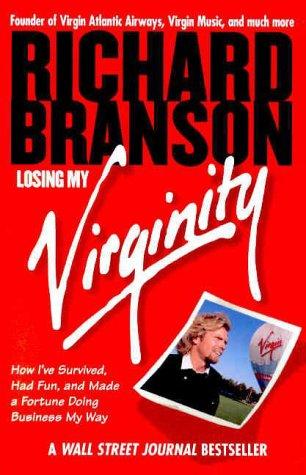
- «Losing My Virginity» is a memoir, and a memoir is evidence about one life, not about what works. The events are checkable. The causal story attached to them is not.
- Survivorship, in numbers: in the plant-level US Census data Camerer and Lovallo cite, 61.5% of entrants had exited within five years and 79.6% within ten. The four in five who leave do not write books.
- The interesting complication: prior success does predict later success. Across 9,790 venture-backed startups, founders with a previous IPO had a 30.3% chance of another, against 20.9% for first-timers. Real persistence — and still a 70% failure rate.
- «Say yes, then work out how» has been run as an experiment. When entry payoffs depended on relative skill, average industry profit fell from +$16.87 to −$1.56 per round; among people who had signed up because skill mattered, it was −$13.13.
- The Virgin Atlantic versus British Airways chapter is the one long stretch that can be audited against court records — and it survives the audit. That is unusual, and it is the best reason to read the book.
Verdict
Read it — as a document, not as a method. Richard Branson wrote a good memoir. It names dates and numbers, it includes losses and humiliations, and it does not claim to be a study. On the site’s usual test (does the central claim survive contact with the research) it is barely eligible, because its central claim is «this is what happened to me», and that is largely true.
What fails is the thing readers do with it. Every entrepreneur memoir carries an implied second claim: that the author’s methods caused the outcome, and that copying them moves your odds. That claim is testable, and it does badly.
The claim on trial
Stated in the form the book invites: Branson’s disposition (say yes first, protect the downside, treat the brand as the asset, stay curious, refuse to be bored by detail) produced Virgin, and a reader who adopts the disposition improves their own chances.
Two parts: a causal claim about one case, and a transfer claim about readers. Neither can be settled by the memoir itself, because the memoir is an output of the process it is trying to explain.
A checked negative before anything else. Searching Crossref on 11 August 2026 for trials or cohort studies testing whether reading entrepreneurial autobiographies changes venture formation or venture outcomes returned nothing. Untested is not refuted — it means the transfer claim rests on the plausibility of its parts, so the parts get checked one at a time.
The survivor writes the manual
Start with the sampling. We wanted a current official base rate and could not get one — the US Bureau of Labor Statistics establishment-survival table would not load for us, so we are not quoting a figure we could not check at source. The older plant-level record is blunt enough. Across US Census of Manufacturers data spanning 1963 to 1982, 61.5% of entrants had exited within five years and 79.6% within ten, most of them failures (figures reported in Camerer & Lovallo, American Economic Review, 1999). Books get written by the minority that stays.
That is not merely a missing-data problem; it inverts the advice. Modelling how organisations learn by watching other organisations, Jerker Denrell showed that when the observed sample is the set of survivors, risky practices appear positively related to performance even when they are unrelated to it in the full population, because high-variance strategies are over-represented among the extreme outcomes that stay visible (Denrell, Organization Science, 2003). The traits a memoir foregrounds (bold commitments, unbudgeted bets, ignoring the spreadsheet) are the ones the survivor filter most inflates.
The returns picture has the same shape. Using US Survey of Income and Program Participation data, Barton Hamilton found median self-employment earnings after ten years in business were 35% below the predicted wage on a paid job of the same duration, whichever earnings measure was used (Hamilton, Journal of Political Economy, 2000). The standing puzzle is why people keep entering an activity with low risk-adjusted returns; the candidates are risk tolerance, overconfidence and non-monetary taste for the work (Åstebro, Herz, Nanda & Weber, Journal of Economic Perspectives, 2014). Branson’s book is a long, charming argument for the third, which is the part of it that is honest.
The complication: success predicts success
The lazy version of this critique stops at «it was all luck». That is wrong, and the paper that shows it is wrong is the most interesting thing on this page.
Gompers, Kovner, Lerner and Scharfstein tracked 9,790 venture-backed ventures by 8,753 entrepreneurs from 1975 to 2000, defining success as taking a company public. Founders whose previous venture had succeeded had a predicted 30.3% chance of succeeding again. Founders who had previously failed: 21.8%. First-time founders: 20.9% (Gompers et al., Journal of Financial Economics, 2010). Prior success is worth about nine percentage points. That is persistence, and it is real.
Two details make it sharper rather than reassuring. First, the skill that persists is mostly market timing — picking the right industry and year. In the same data, 52% of computer startups founded in 1983 eventually went public against 18% of those founded in 1985, and founders who timed well once timed well again. Second, the authors argue the effect is partly self-fulfilling: suppliers, customers and investors commit resources to a founder with a track record, which raises the odds independently of skill.
That cuts both ways against the memoir. It supports the idea that Branson was not a coin landing heads six times — a founder with a record does carry something forward. It also relocates the something: what transfers is timing judgment and the standing that makes other people say yes to you, neither of which is a habit a reader can adopt on Tuesday. And 30.3% still means a proven winner fails roughly seven times in ten.
Say yes now, work it out later
This is the book’s signature move, and it has a clean experimental analogue. Colin Camerer and Dan Lovallo ran an eight-session market-entry game with 118 undergraduate and MBA subjects, 24 rounds each: in half, payoff rank was random; in half, it depended on relative skill at logic puzzles or trivia. Under random ranking, industry profit was positive in 74 of 96 rounds and averaged +$16.87. Under skill ranking, it was positive in 40% of rounds and averaged −$1.56 — a matched-pair difference of $18.43 (t = −7.43, p < 0.0001), about two extra entrants per round (Camerer & Lovallo, American Economic Review, 1999).
The second half maps onto memoir readers. In four sessions, subjects had volunteered knowing trivia skill would determine payoffs — a self-selected pool, like people who read founder books. There, skill-condition industry profit averaged −$13.13 against +$13.96 under random ranking, and was positive in only 3 of 48 skill-rank rounds. People do not merely overrate themselves; they forget that everyone else in the room selected in for the same reason. Camerer and Lovallo call it reference group neglect.
The related folk claim (that entrepreneurs are braver) does not hold either. Using representative US data drawn from a screen of 64,622 individuals, and measuring risk propensity two independent ways, Hongwei Xu and Martin Ruef found nascent entrepreneurs were more risk-averse than non-entrepreneurs, and concluded their motives are largely non-monetary (Xu & Ruef, Strategic Organization, 2004). Where risk tolerance can be measured behaviourally, it predicts entry but not performance: among roughly 400,000 Norwegians, those holding common stock were about 50% more likely to start a firm, and the firms they started had about 25% lower sales and 15% lower return on assets (Hvide & Panos, Journal of Financial Economics, 2014).
Branson’s own practice is better than his slogan, and the book says so if read carefully. The Virgin Atlantic decision is described as capped: one leased aircraft, a hand-back clause, a loss ceiling the record company could absorb. That is not «say yes and find out»; it is buying an option. The instruction that survives is «cap the downside, then say yes» — duller, and correct.
How much of a memoir is memory
Business autobiography has a failure mode independent of honesty. Once an outcome is known, judgement of what led to it reorganises around that outcome: hindsight bias narrows attention onto a single causal story and inflates confidence in it, driven by ordinary recall and meaning-making rather than dishonesty (Roese & Vohs, Perspectives on Psychological Science, 2012).
Attribute ratings then follow the global verdict rather than the reverse. Nisbett and Wilson showed 118 University of Michigan students one of two staged videotaped interviews with the same instructor — warm in one, cold in the other. Students who saw the warm version rated his appearance, mannerisms and accent as appealing; those who saw the cold version rated the identical attributes as irritating, denied the influence, and insisted the causal arrow ran the other way (Nisbett & Wilson, Journal of Personality and Social Psychology, 1977). Phil Rosenzweig’s argument is that company performance does this at organisational scale: knowing a firm won, observers rate its culture, leadership and strategy as excellent, and the resulting «lessons» are the halo, not the cause (Rosenzweig, California Management Review, 2007).
So the fair test is not «is Branson sincere» but «where can the account be checked». Two places, both matters of public record, and the book comes out well.
The Virgin Music sale. On 6 March 1992 Thorn EMI agreed to buy Virgin Music Group for $877 million, about £510 million. Branson said the proceeds were for the airline: «Obviously it does need funds and this is one way of getting funds into the airline» (UPI, 6 March 1992). The memoir’s account of selling the profitable business to feed the fragile one is not retrospective myth-making; the contemporaneous reporting says the same.
The British Airways case. On 11 January 1993, in the High Court in London, BA apologised unreservedly and paid £500,000 in libel damages to Branson personally and £110,000 to Virgin Atlantic, with Virgin’s legal costs estimated at £2–3 million, and withdrew its own allegations against Branson as «wholly untrue» (UPI, 11 January 1993). Ten days later, BA’s board reported that its own lawyers’ investigation found the conduct «was confined to a relatively small number of unconnected incidents involving a very small number of employees», with directors giving assurances that they authorised nothing (UPI, 21 January 1993). The payment and the apology are fact. Whether it was a directed campaign, as the book frames it, was contested at the time, and the contest is on the record too.
One business claim in the book is general, and it is the one with the weakest support. Branson treats the Virgin name as portable across unrelated categories — records, airlines, rail, drinks, telecoms. Across 20 extension concepts for six well-known brands, attitudes were higher when consumers perceived a fit between the categories and rated the original brand highly, and lower when the extension looked too easy to make (Aaker & Keller, Journal of Marketing, 1990). Virgin’s cross-category stretch is an anomaly relative to that finding, not a demonstration of it — and an anomaly with a sample size of one brand is not a strategy.
Who should read it
Read it to know what running a company in the 1970s and 1980s felt like from inside, told by someone with a real gift for narrative and an unusual willingness to include the parts where he looks foolish, frightened or broke. As a first-person account of an era (records, retail, deregulated aviation) it is good, and better company than most business writing.
Read it if you already run something and want morale rather than method. It conveys well that trouble is survivable.
Do not read it as a playbook, and be careful reading it while deciding whether to quit a job. It compresses years of buffered risk into a few pages of nerve, and it never shows the four in five who were gone within a decade. For the general pattern rather than one man’s, the rest of our reviewed titles cover books that at least tried to be studies.
The advice book drawn from this life is «Screw It, Let’s Do It», and it is where the claims become testable. «Tribes» has the same survivorship structure.
One thing to try
Before any commitment the book would call a «yes», write down two numbers. First, the maximum you lose if it goes badly, expressed in months of income, and the specific clause or contract that caps it — Branson’s version was a hand-back clause on a leased aircraft. Second, the base rate: how many people you know who tried something in this class, including the ones who stopped talking about it. If you cannot name the cap, it is not a capped bet. If the list contains only successes, it is a survivor sample and you are about to reason from it.
Get the book
Find «Losing My Virginity» on Amazon — as an Amazon Associate, The Boring Work earns from qualifying purchases (disclosure).
The boring bottom line
«Losing My Virginity» is an honest memoir that gets treated as a manual. The events hold up where they can be checked — the 1992 sale to Thorn EMI and the 1993 High Court apology from British Airways are on the record, broadly as the book has them. What does not hold up is the inference readers make: that the temperament produced the outcome and is transferable. Founders with a track record do outperform, by about nine percentage points, and even they fail seven times in ten. The rest of the gap between Branson and the four in five who exit within a decade is not recoverable from a memoir written by the survivor.
When to see a professional
This page is general information about a book and the research around entrepreneurship. It is not financial advice, and nothing here is a recommendation to start, fund, buy or sell anything. Before borrowing against a home, pledging personal guarantees, cashing in a pension or leaving employment to start a business, talk to a qualified accountant and an independent, appropriately regulated financial adviser about your own circumstances. If a business situation is affecting your sleep, mood or health, that is a matter for a doctor, not a memoir.
Sources
- Denrell, J. (2003). Vicarious learning, undersampling of failure, and the myths of management. Organization Science, 14(3), 227–243.
- Hamilton, B. H. (2000). Does entrepreneurship pay? An empirical analysis of the returns to self-employment. Journal of Political Economy, 108(3), 604–631.
- Åstebro, T., Herz, H., Nanda, R. & Weber, R. A. (2014). Seeking the roots of entrepreneurship: insights from behavioral economics. Journal of Economic Perspectives, 28(3), 49–70.
- Gompers, P., Kovner, A., Lerner, J. & Scharfstein, D. (2010). Performance persistence in entrepreneurship. Journal of Financial Economics, 96(1), 18–32.
- Camerer, C. & Lovallo, D. (1999). Overconfidence and excess entry: an experimental approach. American Economic Review, 89(1), 306–318.
- Xu, H. & Ruef, M. (2004). The myth of the risk-tolerant entrepreneur. Strategic Organization, 2(4), 331–355.
- Hvide, H. K. & Panos, G. A. (2014). Risk tolerance and entrepreneurship. Journal of Financial Economics, 111(1), 200–223.
- Roese, N. J. & Vohs, K. D. (2012). Hindsight bias. Perspectives on Psychological Science, 7(5), 411–426.
- Nisbett, R. E. & Wilson, T. D. (1977). The halo effect: evidence for unconscious alteration of judgments. Journal of Personality and Social Psychology, 35(4), 250–256.
- Rosenzweig, P. (2007). Misunderstanding the nature of company performance: the halo effect and other business delusions. California Management Review, 49(4), 6–20.
- Aaker, D. A. & Keller, K. L. (1990). Consumer evaluations of brand extensions. Journal of Marketing, 54(1), 27–41.
- UPI (6 March 1992). Virgin Music sold to Thorn EMI for $877 million.
- UPI (11 January 1993). BA apologizes to Virgin Atlantic for libel.
- UPI (21 January 1993). BA directors not implicated in «dirty tricks» affair.