TL;DR
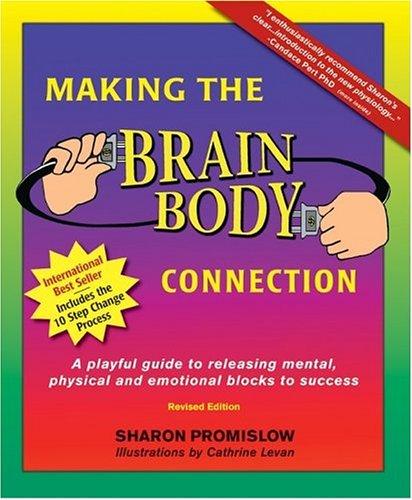
- «Making the Brain Body Connection» is a consumer edition of Brain Gym / Educational Kinesiology. Its central mechanism (specific movements that integrate the left and right hemispheres) is a catalogued neuromyth, not a contested finding.
- The entire Brain Gym efficacy literature, when two peer-reviewed teams went looking, came to four studies. The best of them met 22% of the standard quality indicators for special-education research.
- A 2023 meta-analysis of 10 Brain Gym studies in older adults found the Brain Gym groups did no better than controls on cognitive testing.
- The biggest direct test of the left-brain/right-brain idea (1,011 people, 7,266 brain regions) found no such thing as a globally «left-brained» or «right-brained» person.
- In a survey of teachers who were specifically interested in brain science, zero percent of the 137 British teachers correctly rejected the claim this book is built on.
Verdict
Skip it. This is the weakest book we have reviewed. Not because it is unkind or badly written (Sharon Promislow is a friendly writer and the exercises are physically harmless) but because its explanatory engine had already been examined and rejected in the peer-reviewed literature before the book was published, and has been examined and rejected repeatedly since.
Promislow is a Specialized Kinesiology instructor, and the book is a popular vehicle for Brain Gym, the program Paul and Gail Dennison built in the 1970s under the name Educational Kinesiology. «Cross crawl», «Brain Buttons», «hook-ups», sipping water to «switch on» the brain: these are Brain Gym moves, presented with Brain Gym’s account of why they work. That account is the problem. Every load-bearing part of it has been checked. None of it held.
The claim on trial
The falsifiable core is this: particular small movements, chosen for their geometry, improve communication between the cerebral hemispheres, and that improved communication produces better learning, reading, memory and emotional regulation.
Promislow states it directly in her own promotional Q&A for the book: «when you move and opposite arm and leg, you are stimulating better neural pathways between your two brain hemispheres, which are like the super highways for better brain associations. The more interconnections you have, the smarter you are» (Enhanced Learning & Integration, 1999). The same page goes further: «Slow cross-lateral movement stimulates the manufacture of dopamine in the frontal lobe of the brain», and names Ritalin and childhood ADHD as the context. That is a pharmacological claim about a marching motion.
Two claims are fused here. Claim A: moving your body can help you think. Claim B: this particular movement integrates your hemispheres. A is modest and partly supported. B is the book’s actual thesis and has no support at all.
Where the theory came from
Brain Gym did not invent its own neurology. Keith Hyatt traced it to three older bodies of theory and checked each: neurological repatterning, cerebral dominance, and perceptual-motor training (Hyatt, Remedial and Special Education, 2007).
The repatterning half descends from the Doman-Delacato method, which held that a child who walked before crawling had skipped a developmental stage and could be repaired by re-performing the missed movements. That is why crawling motions are central to Brain Gym and why «cross crawl» is the first exercise most people meet. The American Academy of Pediatrics reviewed patterning and concluded that it «is based on an outmoded and oversimplified theory of brain development» and that «its use continues to be unwarranted» (American Academy of Pediatrics, Pediatrics, 1999). That statement was retired in December 2022 and is no longer current AAP policy; nothing published since has rehabilitated patterning.
The cerebral-dominance half descends from Samuel Orton’s 1930s idea that mixed dominance causes reading difficulty. Hyatt’s conclusion on the whole edifice is worth quoting because it addresses the book’s «switching on» language exactly: Brain Gym materials «provide no scientific support that the brain needs to be “turned on,” nor do the materials provide research support regarding whole brain learning or even a definition of exactly what this term means».
The book also imports muscle checking — Promislow describes Specialized Kinesiologists using «muscle checking as a way to get a deep energetic body response». A review of 22 studies of applied and specialised kinesiology found the methodology uniformly poor: every clinical study scored 0 out of 5 on the JADAD scale, and the authors concluded there was insufficient evidence for diagnostic accuracy, for the validity of the muscle response itself, or for effectiveness in any condition (Hall et al., Forschende Komplementärmedizin, 2008).
The left-brain right-brain premise
The premise underneath all of it is that people run on one hemisphere and need the other switched in. Resting-state fMRI data from 1,011 people aged 7 to 29 were analysed across 7,266 grey-matter regions to see whether strongly lateralised connections covary within individuals. They do not. The authors concluded that lateralisation «appears to be a local rather than global property of brain networks» and that the data are «not consistent with a whole-brain phenotype of greater “left-brained” or greater “right-brained” network strength across individuals» (Nielsen et al., PLoS ONE, 2013).
Lateralisation is real; language and visuospatial processing do lean. The trait the book is trying to fix is not.
What happened when Brain Gym was tested
Hyatt’s search turned up five peer-reviewed efficacy articles. A second team re-ran the search, found nothing further and no published rebuttal of Hyatt, and dropped one article because its author had also been a study participant, leaving four. Scored against the standard quality indicators for special-education intervention research, the two best studies met 22% of them and the other two met 17%. None reported treatment fidelity, none measured anything beyond an immediate post-test, none reported effect sizes. Brain Gym was by then sold in more than 80 countries (Spaulding, Mostert & Beam, Exceptionality, 2010).
Since then the picture has not improved. A single-subject study deliberately built to fix the earlier design flaws compared Brain Gym against plain physical activity in children with developmental disabilities. Brain Gym never clearly beat the control; for one child, mean academic engagement was 74% during Brain Gym, 69% during the control activity and 79% at baseline, and the control condition trended upward while Brain Gym did not (Watson & Kelso, International Journal of Special Education, 2014). Ten studies of Brain Gym in older people, pooled across six databases, showed the same result at scale: changes in Mini-Mental State Examination scores in the Brain Gym groups were no greater than in control groups, and the authors concluded that Brain Gym «will not lead to improvements in cognitive function in people with and without cognitive impairment» (Varela et al., Geriatric Nursing, 2023).
On the specific mechanisms — «Brain Buttons» increasing carotid blood flow, «hook-ups» reconnecting the hemispheres via the corpus callosum, sipping water switching the brain on — we searched Crossref and the reviews above in August 2026 and found no controlled test of any of them. That is a checked negative, not a refutation: these mechanisms have not been shown false, they have never been measured, in nearly fifty years of commercial sale. Ben Goldacre made the same point in 2006 after reading the Brain Gym teacher’s manual, noting drily that no child can stimulate carotid arteries located inside the ribcage, and adding that his objection was never to taking an exercise break (Goldacre, The Guardian, 18 March 2006).
Does exercise help thinking at all
This is where the book brushes against something real, and it deserves the same citation standard as the criticism.
In children and adolescents, sustained exercise programmes do move executive function a little: 19 randomised trials totalling 5,038 participants found a pooled standardised mean difference of 0.20 (95% CI 0.09 to 0.30) for overall executive function and 0.26 for inhibitory control (Xue, Yang & Huang, British Journal of Sports Medicine, 2019). A meta-regression of 80 randomised trials in healthy people found a small overall effect that did not differ across cognitive domains — and, notably for this book, larger benefits from coordinative exercise than from other types (Ludyga et al., Nature Human Behaviour, 2020). That is the friendliest finding the book will ever get, and it refers to weeks of dance, ball sports and balance training, not thirty seconds of marching.
Then the correction. An umbrella review took 24 meta-analyses of randomised trials of exercise and cognition in healthy people and re-analysed the underlying trials. Pooled effect: d = 0.22 (95% CI 0.16 to 0.28). After accounting for active control groups and baseline differences: d = 0.13. After correcting for publication bias: d = 0.05, with a confidence interval crossing zero (−0.09 to 0.14). The authors advised caution about claims linking exercise to cognitive benefit «until more reliable causal evidence accumulates» (Ciria et al., Nature Human Behaviour, 2023). A Cochrane review of 12 trials in 754 people over 55 found no cognitive benefit in any domain from aerobic exercise, including in the subgroup where cardiorespiratory fitness demonstrably improved (Young et al., Cochrane Database of Systematic Reviews, 2015).
Water is the other place the book is near something true. Actual dehydration does impair cognition: across 33 studies, 280 effect-size estimates and 413 subjects at 1–6% body-mass loss, the overall effect was −0.21, with attention hit hardest at −0.52 (Wittbrodt & Millard-Stafford, Medicine & Science in Sports & Exercise, 2018). Being dehydrated is bad for your attention. Sipping water does not switch on your brain.
Why this book spread
The interesting question is why a wrong theory reached this many classrooms. Paul Howard-Jones’s review of the field describes neuromyths as «biased distortions of scientific fact» that persist in schools and are «often being used to justify ineffective approaches to teaching» (Howard-Jones, Nature Reviews Neuroscience, 2014).
The prevalence data are worse than that summary suggests. A survey of 242 primary and secondary teachers (137 in the UK, 105 in the Netherlands, all of them selected because they were interested in the neuroscience of learning) put 15 neuromyths inside a 32-item questionnaire. On average teachers believed 49% of the myths while answering about 70% of the general brain-knowledge items correctly. On the item that is this book’s thesis word for word, «Short bouts of co-ordination exercises can improve integration of left and right hemispheric brain function», 88% of the British teachers and 82% of the Dutch teachers answered incorrectly — and 0% of the British teachers and 5% of the Dutch teachers answered correctly, the rest saying they did not know. Eighty-two percent of the UK teachers had encountered Brain Gym in their school. The paper’s most uncomfortable finding: more general knowledge about the brain predicted more belief in neuromyths, not less (Dekker, Lee, Howard-Jones & Jolles, Frontiers in Psychology, 2012).
Enthusiasm for brain science is not protection against this book. It is the delivery mechanism. A larger US study found the pattern is dose-dependent rather than hopeless: of a core set of «classic» neuromyths, the general public (n = 3,045) endorsed 68%, educators (n = 598) 56%, and people with high neuroscience exposure (n = 234) 46% — training reduces the error substantially and eliminates it in nobody (Macdonald et al., Frontiers in Psychology, 2017).
Who should read it
No parent, no teacher, no adult looking to think more clearly. The mechanism is wrong, the outcome claims are untested or tested and negative, and the ADHD framing on the author’s own promotional material points a vulnerable audience at a movement routine.
One narrow audience: anyone who wants a clean specimen of how a discredited 1960s theory gets rebranded and sold as new neuroscience. Read it beside Hyatt 2007 and you have the anatomy in two documents. That is the pattern we look for across our reviewed titles.
For the same brain-based reasoning applied to management, see «Your Brain at Work»; for a personality theory built on one small brain scan, «The Introvert Advantage».
One thing to try
Keep the break, drop the theory. If you have been sitting and working for an hour, stand up and move for two minutes, and drink some water if you have not had any. The movement break has a small, real effect in the population where it has been best tested — SMD 0.20 in 5,038 children and adolescents across 19 trials (Xue, Yang & Huang, British Journal of Sports Medicine, 2019) — and correcting genuine dehydration recovers attention (Wittbrodt & Millard-Stafford, Medicine & Science in Sports & Exercise, 2018). It does not matter which arm goes with which leg. Nothing is being integrated. You are just less stiff and less thirsty, and that is enough of a reason.
Get the book
Find «Making the Brain Body Connection» on Amazon — as an Amazon Associate, The Boring Work earns from qualifying purchases (disclosure).
The boring bottom line
«Making the Brain Body Connection» sells a mechanism that does not exist, using a program whose evidence base is four flawed studies from before 2003 and two null results since. Its parent theory was rejected by a joint statement of paediatric and neurological bodies before the author was writing. Its premise about hemispheric types was contradicted by the largest study ever run on the question. Its promise that coordination exercises integrate the hemispheres is item 15 on a standard neuromyth inventory.
None of that stopped it, and the reason is in the Dekker data. The people most likely to believe this book are the people most interested in the brain. That is the finding worth carrying away — not that a 1999 wellness book was wrong, but that being curious about neuroscience made teachers more vulnerable to it, and 137 British teachers between them produced not one correct answer about the claim on its cover. Interest is not knowledge. Ofsted was still warning English schools off Brain Gym as a gimmick in 2018 (Weale, The Guardian, 4 December 2018), nineteen years after this book appeared.
When to see a professional
This article is general information about a book and the published literature. It is not medical advice and it is not a diagnosis.
If a child is struggling with reading, attention or coordination, ask for a proper assessment through your school or family doctor — an educational psychologist, a paediatrician, a speech and language therapist or an occupational therapist. Do not substitute a movement programme for that assessment, and do not delay it. If you or a child are on prescribed treatment for ADHD or anything else, do not start, stop or change it on the strength of a book; that decision belongs to you and your prescriber. Persistent low mood, anxiety or memory change over weeks should go to a clinician, not to an exercise routine.
Sources
- Hyatt, K. J. (2007). Brain Gym: Building stronger brains or wishful thinking? Remedial and Special Education, 28(2), 117-124. 10.1177/07419325070280020201
- Spaulding, L. S., Mostert, M. P., & Beam, A. P. (2010). Is Brain Gym an Effective Educational Intervention? Exceptionality, 18(1), 18-30. 10.1080/09362830903462508
- Varela, S., Ayán, C., Bidaurrazaga-Letona, I., Diz, J. C., & Duñabeitia, I. (2023). The effect of Brain Gym on cognitive function in older people: A systematic review and meta-analysis. Geriatric Nursing, 53, 175-180. 10.1016/j.gerinurse.2023.07.015
- Watson, A., & Kelso, G. L. (2014). The Effect of Brain Gym on Academic Engagement for Children with Developmental Disabilities. International Journal of Special Education, 29(2), 75-83. Full text (ERIC EJ1029010)
- Nielsen, J. A., Zielinski, B. A., Ferguson, M. A., Lainhart, J. E., & Anderson, J. S. (2013). An Evaluation of the Left-Brain vs. Right-Brain Hypothesis with Resting State Functional Connectivity MRI. PLoS ONE, 8(8), e71275. 10.1371/journal.pone.0071275
- Dekker, S., Lee, N. C., Howard-Jones, P., & Jolles, J. (2012). Neuromyths in Education: Prevalence and Predictors of Misconceptions among Teachers. Frontiers in Psychology, 3, 429. 10.3389/fpsyg.2012.00429
- Howard-Jones, P. A. (2014). Neuroscience and education: myths and messages. Nature Reviews Neuroscience, 15(12), 817-824. 10.1038/nrn3817
- Macdonald, K., Germine, L., Anderson, A., Christodoulou, J., & McGrath, L. M. (2017). Dispelling the Myth: Training in Education or Neuroscience Decreases but Does Not Eliminate Beliefs in Neuromyths. Frontiers in Psychology, 8, 1314. 10.3389/fpsyg.2017.01314
- American Academy of Pediatrics, Committee on Children with Disabilities (1999). The Treatment of Neurologically Impaired Children Using Patterning. Pediatrics, 104(5), 1149-1151. Statement retired December 2022. 10.1542/peds.104.5.1149
- Hall, S., Lewith, G., Brien, S., & Little, P. (2008). A Review of the Literature in Applied and Specialised Kinesiology. Forschende Komplementärmedizin, 15(1), 40-46. 10.1159/000112820
- Ciria, L. F., et al. (2023). An umbrella review of randomized control trials on the effects of physical exercise on cognition. Nature Human Behaviour, 7(6), 928-941. 10.1038/s41562-023-01554-4
- Ludyga, S., Gerber, M., Pühse, U., Looser, V. N., & Kamijo, K. (2020). Systematic review and meta-analysis investigating moderators of long-term effects of exercise on cognition in healthy individuals. Nature Human Behaviour, 4(6), 603-612. 10.1038/s41562-020-0851-8
- Xue, Y., Yang, Y., & Huang, T. (2019). Effects of chronic exercise interventions on executive function among children and adolescents: a systematic review with meta-analysis. British Journal of Sports Medicine, 53(22), 1397-1404. 10.1136/bjsports-2018-099825
- Young, J., Angevaren, M., Rusted, J., & Tabet, N. (2015). Aerobic exercise to improve cognitive function in older people without known cognitive impairment. Cochrane Database of Systematic Reviews, 4, CD005381. 10.1002/14651858.CD005381.pub4
- Wittbrodt, M. T., & Millard-Stafford, M. (2018). Dehydration Impairs Cognitive Performance: A Meta-analysis. Medicine & Science in Sports & Exercise, 50(11), 2360-2368. 10.1249/MSS.0000000000001682
- Promislow, S. (1999). Questions & Answers about «Making the Brain/Body Connection». Enhanced Learning & Integration Inc. enhancedlearning.com/questions.htm
- Goldacre, B. (2006). Brain Gym exercises do pupils no favours. The Guardian, 18 March 2006. theguardian.com
- Weale, S. (2018). Ofsted warns teachers against ‘gimmicks’ such as Brain Gym. The Guardian, 4 December 2018. theguardian.com