TL;DR
- We could not read this book. The only scan is lending-restricted, so this page checks what can be checked: the bibliographic record, a full-text index probe, and the claims the eagle-metaphor genre runs on.
- That genre’s signature fact is fabricated. The story of the 40-year-old eagle that smashes off its beak over 150 days and lives 30 more years has no ornithology behind it. The oldest wild bald eagle in the US banding record was 38 — banded 5 August 1977, found dead beside a road on 2 June 2015.
- Our probe of the scan found «150 days», «plucks», «rebirth», «70 years» and «molt» absent, and «turkeys», «beak», «talons» and «goal setting» present. On that evidence this book may not carry the genre’s fake fact.
- «Don’t fly with turkeys» has a real research shadow and a contested one. Instrumented running data on about 1.1 million people shows genuine contagion; the famous obesity and smoking network papers were attacked on identification grounds and the attack largely stuck. The «average of the five people around you» number has no source.
- One piece of this genre survives testing: goals. Specific, difficult goals beat «do your best», and pre-committed if-then plans moved goal attainment by d = 0.65 across 94 independent tests.
Verdict
Skip it. Not because we read it and disliked it — because nobody outside a library can read it, and everything it is likely to contain has been tested elsewhere by people who reported numbers.
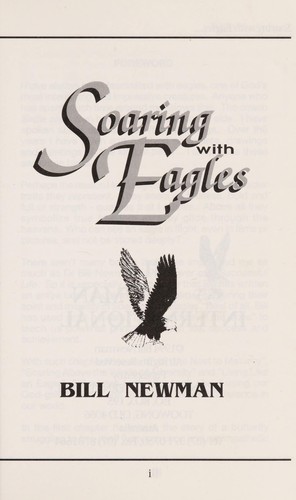
«Soaring with Eagles» is a 106-page paperback, self-published in 1994 through Bill Newman International in Toowong, Queensland (Internet Archive catalogue record). The publisher’s description is the whole pitch: «Allow the monarch of the skies, the eagle, to teach you how your life can count. Come on… it’s time to fly!» (publisher blurb as listed on Goodreads). That is a genre, and the genre has an evidence problem worth a page even when the individual book is not.
The claim on trial
The claim the eagle books make is this: your results are set by attitude and by the company you keep, not by circumstance, and a person can decide to change both. The eagle carries the argument, chosen because it is supposed to demonstrate in its own biology that renewal is a decision.
Two things follow, and both are testable without the book. The eagle has to do what the metaphor says. And association and attitude have to move outcomes by roughly the amount claimed.
What we could and could not check
We could not obtain the text. The single digitised copy is access-restricted and no excerpt of any length is in circulation. What we could do is query the full-text index built over that scan and record which strings hit and which do not.
Absent from the scan: «150 days», «plucks», «rebirth», «70 years», «molt». Present: «turkeys», «beak», «talons», «goal setting». Controls behaved correctly — «photosynthesis» and «Ljubljana» hit elsewhere in the corpus but not this item (Open Library full-text search, queried 11 August 2026).
That cuts against the easy assumption. The best-known fake fact in the eagle-metaphor tradition does not appear in the eagle book a reader would most expect to contain it — at least not in the wordings the story is normally told in. This is index evidence, not a reading: it depends on the scan’s OCR, and a myth can be retold in words we did not test. Absence of these strings is evidence, not proof.
We are also retracting something. An earlier version of this page listed the book’s themes — action over planning, obstacles as tuition, fear as the real barrier. None of that can be sourced to a copy of the book, so it is gone. Attributing a thesis to a book you have not opened is the same error as attributing a beak-smashing ritual to a bird nobody has filmed.
The eagle that never was
The story: at 40 the eagle’s talons go soft, its beak curls, its feathers stick to its chest; it flies to a mountaintop, beats its beak off against a rock, waits for a new one, tears out its talons, plucks its feathers, and after 150 days is reborn to live another 30 years. It has circulated since at least 2007 in email, slideshow and video.
Every element is wrong. Beak and talons are keratin over living tissue and grow continuously through life; a raptor keeps its beak in shape by tearing tough prey and wiping it on hard surfaces, and would starve without it. Raptors do not pluck themselves; they moult symmetrically, a few feathers at a time, so that flight is never lost (Snopes, quoting the University of Minnesota Raptor Center, 2007).
The numbers are wrong too. The oldest wild bald eagle in the USGS banding record lived 38 years and 1 month, the oldest golden eagle 31 years and 8 months, and the oldest captive bald eagle a birder could locate reached 48; eagle flight feathers are replaced one at a time across years, never all at once (Laura Erickson, 2017). That record bird was banded as a nestling on 5 August 1977 in New York and recovered dead in Henrietta on 2 June 2015, having apparently bred at the same site for 34 years (New York State DEC bulletin, 2015). Banding records are minimum ages from voluntary reports, so they understate rather than overstate longevity (USGS Bird Banding Laboratory, Longevity Records version 2025.1). They still fall three decades short of 70.
Beak tips can regrow; an entire beak cannot, and an eagle that lost one «would most likely die». Self-plucking is also fatal (feathers are the bird’s insulation and rain shield) and a beakless, featherless eagle carries nowhere near the reserves to survive five months without hunting (Lead Stories, quoting Erin Katzner of the World Center for Birds of Prey, July 2021).
The story is not modern invention. The Latin Psalter’s «Renovabitur sicut aquilae iuventus tua» (your youth shall be renewed like the eagle’s) was read literally, and the bestiary tradition supplied a mechanism: the ageing eagle whose hooked beak stops it eating sharpens that beak on a rock and eats again, the rock being Christ (Medieval Bestiary, eagle sources). The motivational version is that allegory with the theology removed and a fake ornithological citation bolted on. The original was honest about being a metaphor.
Don’t fly with turkeys
The genre’s second staple is association: you become the average of the people around you, so change the people. «Turkeys» does appear in this scan, so the standard contrast is likely in the book somewhere. The popular «you are the average of the five people you spend the most time with» has no study behind it and no traceable origin. Treat it as a slogan.
The serious version has a real literature and a real fight. Christakis and Fowler tracked 12,067 people in the Framingham social network from 1971 to 2003 and reported that a person’s chance of becoming obese rose 57% (95% CI 6 to 123) if a friend became obese (Christakis & Fowler, New England Journal of Medicine, 2007), and that in the same network a spouse quitting smoking cut a person’s chance of smoking by 67% and a friend quitting by 36% (Christakis & Fowler, NEJM, 2008).
Then the methodologists arrived. Cohen-Cole and Fletcher applied the same models to adolescent data and recovered significant «contagion» in acne, height and headaches (traits that cannot spread through friendship) with the effects vanishing once shared environment and common trends were controlled (Cohen-Cole & Fletcher, BMJ, 2008). Their companion paper found the obesity result did not survive the same corrections (Cohen-Cole & Fletcher, Journal of Health Economics, 2008). Lyons argued the estimation and the friendship-asymmetry test do not identify contagion at all (Lyons, Statistics, Politics, and Policy, 2011). Shalizi and Thomas proved the general point: in observational network data, homophily and contagion are non-parametrically confounded, so no amount of care recovers the causal effect (Shalizi & Thomas, Sociological Methods & Research, 2011).
Where the design is stronger, an effect survives — smaller than the slogan. Using weather as an instrument across about 1.1 million runners over five years, an extra 10 minutes run by friends caused roughly 3 additional minutes of running (Aral & Nicolaides, Nature Communications, 2017). Randomly assigned Dartmouth roommates influenced each other’s grades and fraternity decisions but not choice of major (Sacerdote, Quarterly Journal of Economics, 2001). And when the US Air Force Academy engineered squadrons to place low-ability students among high performers, those students ended up worse off, because they re-sorted into homogeneous subgroups inside the engineered unit (Carrell, Sacerdote & West, Econometrica, 2013). Peers matter. Choosing them like ingredients does not reliably work.
Goal setting, the tested version
Here the genre earns a straight credit. Specific, difficult goals produce higher performance than «do your best», the relation between goal difficulty and performance is close to linear across the feasible range, and the moderators are known: feedback, commitment, ability, task complexity (Locke & Latham, American Psychologist, 2002; Locke & Latham, Current Directions in Psychological Science, 2006). In health behaviour specifically, goals worked better when they were difficult rather than easy and set publicly rather than privately (Epton, Currie & Armitage, Journal of Consulting and Clinical Psychology, 2017).
The strongest single tool is not the goal but the plan attached to it. Specifying in advance when, where and how you will act (an if-then implementation intention) moved goal attainment by d = 0.65 across 94 independent tests (Gollwitzer & Sheeran, Advances in Experimental Social Psychology, 2006). Direction matters too: among 1,066 people randomised across three levels of goal-setting support, 55% still counted themselves successful a year later, and approach-oriented resolutions beat avoidance-oriented ones 58.9% to 47.1% (Oscarsson et al., PLOS ONE, 2020).
One correction the genre never makes: quitting is sometimes correct. People who disengage from unattainable goals and reinvest in new ones report higher subjective wellbeing than those who grind on (Wrosch et al., Personality and Social Psychology Bulletin, 2003). And «never give up» as a trait is oversold: across 88 independent samples, grit predicted performance weakly and overlapped heavily with plain conscientiousness (Credé, Tynan & Harms, Journal of Personality and Social Psychology, 2017).
Does motivation last
A checked negative. We searched Crossref on 11 August 2026 for controlled trials of motivational speaking (keynote addresses, motivational seminars, inspirational speeches) measured against durable behaviour at follow-up. Nothing returned. What comes back instead is motivational interviewing, a structured clinical counselling method sharing a word and nothing else, plus bibliotherapy for named disorders. The core commercial activity of this genre appears never to have been tested against a control group. Untested is not refuted. It does mean nobody selling it can quote you an effect size.
The adjacent evidence is not encouraging. Across 47 experimental tests with 8,802 participants, interventions that produced a medium-to-large change in intention (d = 0.66) produced only a small-to-medium change in behaviour (d = 0.36) — moving how motivated someone feels is roughly half as useful as it sounds (Webb & Sheeran, Psychological Bulletin, 2006). Vividly imagining the achieved outcome, the exact move an eagle metaphor invites, predicts worse results: across studies of graduates seeking jobs, students pursuing romantic interests and patients recovering from surgery, positive expectations predicted success while positive fantasies predicted failure (Oettingen & Mayer, Journal of Personality and Social Psychology, 2002), and experimentally induced fantasies lowered physiological energy and subsequent achievement (Kappes & Oettingen, Journal of Experimental Social Psychology, 2011).
It can also backfire on the people who most need it. Repeating a self-affirming statement made participants with low self-esteem feel measurably worse than a control group (Wood, Perunovic & Lee, Psychological Science, 2009). Across 607 effect sizes and 23,663 observations, feedback interventions averaged d = 0.41 but reduced performance in more than a third of cases (Kluger & DeNisi, Psychological Bulletin, 1996).
Who should read it
Collectors of Australian speaker ephemera, and anyone writing about the 1990s self-publishing circuit. Nobody else can get a copy without a library loan, and there is no reason to think 106 pages of 1994 exhortation holds something the goal-setting literature does not. For the same argument with numbers, read Locke and Latham on goals and Gollwitzer and Sheeran on if-then plans. Our other self-help book reviews cover the better-known titles in this tradition.
Two better-known books in the same tradition: «Tribes» on leading by choice, and «Notes from a Friend» on state change.
One thing to try
Take one goal you would otherwise phrase as an intention and convert it into an if-then plan with a trigger you cannot miss. Not «I will exercise more» but «if it is Tuesday at 7am, I put on running shoes before opening my laptop». Make it approach-shaped — something you will do, not something you will stop. That is the intervention with d = 0.65 behind it, and it takes about ninety seconds to write down. Then set a date to check whether the goal is still attainable, and reinvest elsewhere if it is not.
Get the book
Find «Soaring with Eagles» on Amazon — as an Amazon Associate, The Boring Work earns from qualifying purchases (disclosure).
The boring bottom line
A genre built its central image on a bird that does not do what the story says. Eagles do not smash off their beaks, do not pluck themselves bare, do not spend 150 days in renewal, and do not reach 70; the record is 38. The tale is a medieval Christian allegory stripped of its theology and re-sold as natural history.
This particular book may be innocent of that error — our index probe found no trace of it. We cannot say more, because we could not read it, and we are not going to pretend otherwise. What we can say is that the two ideas the eagle is usually recruited to carry have been measured: association produces real but modest effects that resist deliberate engineering, and goals work when they are specific, difficult and attached to an if-then plan. Neither finding needs a bird.
Sources
- Internet Archive, «Soaring with eagles» by Bill Newman, 1994, catalogue record
- Goodreads listing carrying the publisher’s description
- Open Library full-text search inside scanned books, queried 11 August 2026
- Snopes, «The Rebirth of the Eagle», rated False, 2007, quoting the University of Minnesota Raptor Center
- Lead Stories, «Eagles Do NOT Live To 70, Break Own Beaks, Pluck Selves Naked», July 2021
- Laura Erickson, «That “eagle rebirth” video? Poppycock!», 2017
- New York State Department of Environmental Conservation, «Oldest Banded Bald Eagle Found in Henrietta», 2015
- USGS Bird Banding Laboratory, Longevity Records of North American Birds, version 2025.1
- The Medieval Bestiary, eagle: source texts including Psalm 102/103:5 and the bestiary beak-sharpening account
- Christakis & Fowler, «The Spread of Obesity in a Large Social Network over 32 Years», New England Journal of Medicine, 2007
- Christakis & Fowler, «The Collective Dynamics of Smoking in a Large Social Network», New England Journal of Medicine, 2008
- Cohen-Cole & Fletcher, «Detecting implausible social network effects in acne, height, and headaches», BMJ, 2008
- Cohen-Cole & Fletcher, «Is obesity contagious? Social networks vs. environmental factors in the obesity epidemic», Journal of Health Economics, 2008
- Lyons, «The Spread of Evidence-Poor Medicine via Flawed Social-Network Analysis», Statistics, Politics, and Policy, 2011
- Shalizi & Thomas, «Homophily and Contagion Are Generically Confounded in Observational Social Network Studies», Sociological Methods & Research, 2011
- Aral & Nicolaides, «Exercise contagion in a global social network», Nature Communications, 2017
- Sacerdote, «Peer Effects with Random Assignment: Results for Dartmouth Roommates», Quarterly Journal of Economics, 2001
- Carrell, Sacerdote & West, «From Natural Variation to Optimal Policy? The Importance of Endogenous Peer Group Formation», Econometrica, 2013
- Locke & Latham, «Building a practically useful theory of goal setting and task motivation: A 35-year odyssey», American Psychologist, 2002
- Locke & Latham, «New Directions in Goal-Setting Theory», Current Directions in Psychological Science, 2006
- Epton, Currie & Armitage, «Unique effects of setting goals on behavior change», Journal of Consulting and Clinical Psychology, 2017
- Gollwitzer & Sheeran, «Implementation Intentions and Goal Achievement: A Meta-analysis of Effects and Processes», Advances in Experimental Social Psychology, 2006
- Oscarsson et al., «A large-scale experiment on New Year’s resolutions», PLOS ONE, 2020
- Wrosch et al., «Adaptive Self-Regulation of Unattainable Goals», Personality and Social Psychology Bulletin, 2003
- Credé, Tynan & Harms, «Much ado about grit: A meta-analytic synthesis of the grit literature», Journal of Personality and Social Psychology, 2017
- Webb & Sheeran, «Does changing behavioral intentions engender behavior change? A meta-analysis of the experimental evidence», Psychological Bulletin, 2006
- Oettingen & Mayer, «The motivating function of thinking about the future: Expectations versus fantasies», Journal of Personality and Social Psychology, 2002
- Kappes & Oettingen, «Positive fantasies about idealized futures sap energy», Journal of Experimental Social Psychology, 2011
- Wood, Perunovic & Lee, «Positive Self-Statements: Power for Some, Peril for Others», Psychological Science, 2009
- Kluger & DeNisi, «The effects of feedback interventions on performance», Psychological Bulletin, 1996