TL;DR
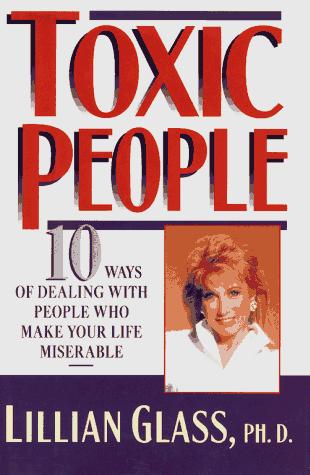
- Glass names 30 types of toxic person and 10 techniques for handling them, sorted by a quiz she wrote herself (Publishers Weekly review of «Toxic People», 1995). Searching PubMed and Crossref on 10 August 2026 found no test of any of it.
- The premise fails at the level of structure. Across 317 taxometric findings from 183 articles, dimensional results outnumbered categorical ones five to one, and no content domain showed aggregate support for categories (Haslam, McGrath, Viechtbauer and Kuppens, Psychological Medicine, 2020).
- «Toxic person» has no clinical standing. The only psychometric attempt we located came 31 years after the book, ran on 547 Turkish adults, and produced one continuous six-item dimension — not 30 kinds (Sarıgül et al., Psicologia: Reflexão e Crítica, 2026).
- Part of the premise is solidly true. Across 148 studies and 308,849 people, stronger social relationships predicted 50% higher odds of survival (Holt-Lunstad, Smith and Layton, PLoS Medicine, 2010), and 9,011 civil servants tracked 12.2 years had a hazard ratio of 1.34 for coronary events if they reported negative close relationships (De Vogli, Chandola and Marmot, Archives of Internal Medicine, 2007).
- The rigorous version counts acts instead of sorting people: 79,201 workers, 9% bullied, hazard ratio 1.59 for cardiovascular disease over 12.4 years (Xu et al., European Heart Journal, 2019).
Verdict
Skip it. Confidence: high. The health premise is real and takes one paragraph to state. The apparatus on top of it (30 named types, a homemade quiz, 10 counter-techniques) has no measurement behind it, contradicts the best evidence on how personality is structured, and trains a costly habit.
This is a different failure from most of the books in our self-help book reviews. Glass is not wrong about the problem, she is wrong about its shape: she converted a dose question (how much hostile behaviour, from whom, how often) into a sorting question, and sorting questions produce confident answers that cannot be checked.
The claim on trial
Strip the labels and «Toxic People» makes three linked claims. That difficult people fall into a fixed set of kinds. That you can assign a person to a kind from observable behaviour, with a quiz. That each kind has a matching technique that neutralizes it. They nest: if people do not come in kinds, the quiz cannot sort them and technique-to-type matching has nothing to match. So the load-bearing claim is the first — is the latent structure of difficult behaviour categorical or continuous?
Glass tested none of it. The 1995 Publishers Weekly review lists her types (the Smiling Two-Faced Sneaky Back-Stabber, the Arrogant Know-It-All, the Control Freak) and techniques including Humor, Direct Confront and Give-Them-Hell-and-Yell, and concludes the book «doesn’t rise above pop psychology». That was the verdict without data. The data exists now.
Toxic is not a construct
«Toxic» is not a diagnosis. It appears in no psychiatric classification, and the classifications have moved the other way: ICD-11 replaced categorical personality disorder subtypes with a severity-graded dimensional model plus trait qualifiers (Tyrer, Reed and Crawford, The Lancet, 2015), a shift argued for a decade earlier because categorical subtypes showed poor convergent validity and excessive comorbidity (Widiger and Trull, American Psychologist, 2007).
Nor is it a research construct. A PubMed title search for «toxic person» and «toxic people» on 10 August 2026 returned zero records for each; a Crossref title search returned nothing treating either phrase as a measured variable. The nearest thing is a 2026 paper developing a Toxic Personality Scale on 389 undergraduates and 158 adults in Turkey, whose factor analyses produced a unidimensional six-item scale correlating with narcissism on the Short Dark Triad. The first serious attempt to operationalize the word arrived three decades late and contradicted the book: one continuous trait, not 30 species.
Untested is not refuted: Glass’s 10 techniques might work. Nobody has checked in 31 years.
Personality does not come in thirty kinds
Taxometrics is the method built for this question, and its literature has been reviewed twice.
The first review covered 177 articles, 311 findings and 533,377 participants. On the raw count 38.9% of findings looked categorical, but categorical results were rarer in newer and methodologically stronger studies; controlling those confounds put the estimated true prevalence at 14%. Normal personality, mood, anxiety and eating disorders and personality disorders other than schizotypal yielded «little persuasive evidence of taxa» (Haslam, Holland and Kuppens, Psychological Medicine, 2012).
The 2020 meta-analysis kept only the 317 findings using the simulation-based comparison index. Dimensional results outnumbered categorical ones five to one, and studies using the index were 4.88 times more likely to return a dimensional result — implying most older categorical findings were artefacts. Six variables survived as plausible genuine categories: alcohol use disorder, intermittent explosive disorder, problem gambling, autism, suicide risk and pedophilia. Nothing resembling a personality type is among them.
A second problem concerns variation within one person. Three experience-sampling studies tracking Big-Five-relevant behaviour across two to three weeks of ordinary life found that «the typical individual regularly and routinely manifested nearly all levels of all traits» (Fleeson, Journal of Personality and Social Psychology, 2001). The same person is disagreeable on Tuesday and warm on Thursday. This does not make traits useless — a meta-analysis of 15 experience-sampling studies and over 20,000 behaviour reports found trait scores predicted a person’s average behaviour at r = .42 to .56 (Fleeson and Gallagher, Journal of Personality and Social Psychology, 2009). Traits are real and predict means. What they do not license is Glass’s move from a mean to a membership card.
Where the real version lives
Organizational psychology spent thirty years building the study Glass gestured at, and its first design decision was to measure acts rather than persons. Workplace incivility (low-intensity rudeness with ambiguous intent to harm) was defined and measured on 1,180 public-sector employees, 71% of whom reported experiencing it in the previous five years, with a third of instigators among the organization’s most powerful people (Cortina, Magley, Williams and Langhout, Journal of Occupational Health Psychology, 2001). Abusive supervision was defined as «subordinates’ perceptions of the extent to which their supervisors engage in the sustained display of hostile verbal and non-verbal behaviors, excluding physical contact», and given a 15-item measure (Tepper, Academy of Management Journal, 2000). Tepper’s later review put prevalence at roughly 13.6% of US workers and annual cost at about $23.8 billion (Tepper, Journal of Management, 2007), and a meta-analysis found the associations with outcomes uniformly negative while cautioning that the measure captures perceptions, not verified conduct (Mackey, Frieder, Brees and Martinko, Journal of Management, 2015).
Note what the instruments do. The Negative Acts Questionnaire-Revised asks how often specific things happened to you (being ignored, having your work criticized in front of others, being shouted at) over a defined window, and never asks you to classify the person (Einarsen, Hoel and Notelaers, Work & Stress, 2009). That is deliberate: incivility, undermining, bullying and abusive supervision overlap heavily and are separated mainly by intensity and intent (Hershcovis, Journal of Organizational Behavior, 2011). Thirty crisp types was never on the table.
The field also produced what Glass never did: a tested intervention. CREW, a six-month unit-level civility programme across 41 health-care units with 1,173 employees at baseline and 907 at follow-up, improved civility, respect, job satisfaction, trust and absences significantly more in the 8 intervention units than the 33 comparison units (Leiter, Laschinger, Day and Oore, Journal of Applied Psychology, 2011). The unit of change was group norms, not a verdict on who was toxic.
What Glass got right
The motivating claim (that other people’s behaviour gets into your body) is the best-supported thing in the book, and earns the same citation standard as the criticism.
The meta-analysis of 148 studies and 308,849 participants found an odds ratio of 1.50 for survival among people with stronger social relationships, strongest for composite measures of social integration (OR = 1.91). A companion review put increases in mortality risk at 29% for social isolation, 26% for loneliness and 32% for living alone (Holt-Lunstad, Smith, Baker, Harris and Stephenson, Perspectives on Psychological Science, 2015). Whitehall II is the closest direct test of Glass’s thesis: among 9,011 civil servants, negative aspects of close relationships carried a hazard ratio of 1.34 (95% CI 1.10–1.63) for incident coronary events over 12.2 years, adjusted for demographics, obesity, hypertension, diabetes, cholesterol and health behaviours, and still significant after further adjustment for negative affectivity and depression.
The mechanism has been watched at close range. Forty-two married couples were admitted to a research unit twice, once for a supportive conversation and once for a disagreement; blister wounds healed more slowly after conflict, and consistently high-hostility couples healed at 60% of the rate of low-hostility couples (Kiecolt-Glaser et al., Archives of General Psychiatry, 2005). At scale, the study of 79,201 Swedish and Danish workers found dose-response relations and a population attributable risk of 5.0% for bullying.
One caution Glass does not offer. A meta-analysis of 126 articles and more than 72,000 people found marital quality related to health at r = .07 to .21, mortality at r = .11, with some outcomes susceptible to publication bias (Robles, Slatcher, Trombello and McGinn, Psychological Bulletin, 2014). Real, replicated, small per unit of exposure — an argument for reducing chronic exposure, not for a dramatic sorting exercise.
The cost of the label
Assigning someone a type is not a free action. The correspondence bias (reading behaviour as evidence of stable disposition while discounting the situation that produced it) persists even when observers know the situational constraints (Gilbert and Malone, Psychological Bulletin, 1995). A quiz converting observed behaviour into a person category produces that error at speed.
The honest caveat: the slogan version is weaker than people think. The actor-observer asymmetry (that we explain ourselves situationally and others dispositionally) came out at d = -0.016 to 0.095 across 173 studies, essentially zero (Malle, Psychological Bulletin, 2006). The bias is real; the aphorism about it is not.
Meanwhile the vocabulary has drifted. Surveying 177 people on their implicit theories of narcissism, researchers noted that public discourse renders narcissistic individuals as «toxic people» or «evil characters», and found laypeople applying an «it is what it seems» heuristic — grandiose behaviour attributed to underlying superiority, vulnerable behaviour to underlying inferiority (Koepernik, Jauk and Kanske, Current Psychology, 2021). A surface reading treated as a depth diagnosis.
Two calibration points. Lifetime prevalence of DSM-IV narcissistic personality disorder among 34,653 US adults was 6.2% (Stinson et al., The Journal of Clinical Psychiatry, 2008), far below the rate at which the word is used. And the «narcissism epidemic» fails a measurement-invariance check: across student cohorts of 1,166, 33,647 and 25,412, several inventory items functioned differently over time, and models accounting for that showed a small decline from the 1990s to the 2010s (d = -0.27) (Wetzel et al., Psychological Science, 2017). This outward creep of harm and pathology terms is itself documented (Haslam, Psychological Inquiry, 2016).
Who should read it
Read it if nobody has ever told you that you may limit contact with someone who treats you badly. That permission is the book’s real product.
Do not read it if you already explain other people by their character, if you are one of two parties in a live conflict, or if you are deciding whether a relationship is bad enough to leave. In all three cases the book hands you a vocabulary that makes your current interpretation feel confirmed and unfalsifiable. Managers should read Cortina and Tepper instead: those literatures supply the measurement and the intervention, and neither requires deciding what species your report belongs to.
For what the evidence does support about difficult conversations, see «Just Listen» and «How to Win Friends and Influence People».
One thing to try
For two weeks, log incidents instead of labels. One line each: date, what was said or done, who was present, how long the effect lasted. No adjectives about the person.
That is the design the workplace-mistreatment instruments use. At the end you have a frequency, a set of triggers and the acts that cost you most — which supports the three responses with evidence behind them: reduce the dose, change the shared norms, or take the record to someone with authority. A type label supports none.
Get the book
Find «Toxic People» on Amazon — as an Amazon Associate, The Boring Work earns from qualifying purchases (disclosure).
The boring bottom line
«Toxic People» is right that hostile relationships cost you, and the price is now measured: a hazard ratio of 1.34 for coronary events across 9,011 civil servants, 1.59 for cardiovascular disease across 79,201 workers, wounds healing at 60% of normal rate in high-hostility couples. Everything above that is unmeasured — thirty types, one quiz, ten techniques, zero validation studies in 31 years.
And the structural claim is the one the evidence contradicts most directly: across 533,377 participants in the first taxometric review and 317 findings in the second, psychological differences come out continuous. Keep the permission to protect yourself. Drop the taxonomy. Count what happened instead of deciding what someone is.
When to see a professional
This page is general information about a book and the research around it. It is not medical advice, not a diagnosis, and not a substitute for assessment by a qualified clinician. Nothing here should be used to diagnose anyone — least of all someone you are in conflict with. Personality disorders are diagnosed by trained clinicians using structured assessment, on a person who is present and consenting.
Speak to a professional if a relationship is affecting your sleep, appetite, concentration or mood for weeks at a time; if you feel unsafe; if someone controls your money, movements or contact with other people; or if you are being harmed at work and internal channels have failed. A clinical psychologist, psychotherapist or your primary-care doctor is the first stop for the health effects. For coercion, threats or violence, contact a domestic-abuse service or the police — those are not interpersonal-technique problems. For workplace mistreatment, occupational health, an employment lawyer or a union representative deals in the documented record described above.
Sources
- Publishers Weekly, review of Lillian Glass, «Toxic People: 10 Ways of Dealing with People Who Make Your Life Miserable», 1995
- Haslam, Holland and Kuppens, «Categories versus dimensions in personality and psychopathology: a quantitative review of taxometric research», Psychological Medicine, 2012
- Haslam, McGrath, Viechtbauer and Kuppens, «Dimensions over categories: a meta-analysis of taxometric research», Psychological Medicine, 2020
- Sarıgül, Turan, Alkhulayfi, Gómez-Salgado and Yıldırım, «Development and initial validation of the toxic personality scale», Psicologia: Reflexão e Crítica, 2026
- Tyrer, Reed and Crawford, «Classification, assessment, prevalence, and effect of personality disorder», The Lancet, 2015
- Widiger and Trull, «Plate tectonics in the classification of personality disorder: shifting to a dimensional model», American Psychologist, 2007
- Fleeson, «Toward a structure- and process-integrated view of personality: traits as density distributions of states», Journal of Personality and Social Psychology, 2001
- Fleeson and Gallagher, «The implications of Big Five standing for the distribution of trait manifestation in behavior», Journal of Personality and Social Psychology, 2009
- Holt-Lunstad, Smith and Layton, «Social relationships and mortality risk: a meta-analytic review», PLoS Medicine, 2010
- Holt-Lunstad, Smith, Baker, Harris and Stephenson, «Loneliness and social isolation as risk factors for mortality», Perspectives on Psychological Science, 2015
- De Vogli, Chandola and Marmot, «Negative aspects of close relationships and heart disease», Archives of Internal Medicine, 2007
- Robles, Slatcher, Trombello and McGinn, «Marital quality and health: a meta-analytic review», Psychological Bulletin, 2014
- Kiecolt-Glaser, Loving, Stowell, Malarkey and Lemeshow, «Hostile marital interactions, proinflammatory cytokine production, and wound healing», Archives of General Psychiatry, 2005
- Xu, Magnusson Hanson, Lange, Starkopf and Westerlund, «Workplace bullying and workplace violence as risk factors for cardiovascular disease: a multi-cohort study», European Heart Journal, 2019
- Cortina, Magley, Williams and Langhout, «Incivility in the workplace: incidence and impact», Journal of Occupational Health Psychology, 2001
- Tepper, «Consequences of abusive supervision», Academy of Management Journal, 2000
- Tepper, «Abusive supervision in work organizations: review, synthesis, and research agenda», Journal of Management, 2007
- Mackey, Frieder, Brees and Martinko, «Abusive supervision: a meta-analysis and empirical review», Journal of Management, 2015
- Einarsen, Hoel and Notelaers, «Measuring exposure to bullying and harassment at work: validity, factor structure and psychometric properties of the Negative Acts Questionnaire-Revised», Work & Stress, 2009
- Hershcovis, «Incivility, social undermining, bullying…oh my! A call to reconcile constructs within workplace aggression research», Journal of Organizational Behavior, 2011
- Leiter, Laschinger, Day and Oore, «The impact of civility interventions on employee social behavior, distress, and attitudes», Journal of Applied Psychology, 2011
- Gilbert and Malone, «The correspondence bias», Psychological Bulletin, 1995
- Malle, «The actor-observer asymmetry in attribution: a (surprising) meta-analysis», Psychological Bulletin, 2006
- Koepernik, Jauk and Kanske, «Lay theories of grandiose and vulnerable narcissism», Current Psychology, 2021
- Stinson et al., «Prevalence, correlates, disability, and comorbidity of DSM-IV narcissistic personality disorder», The Journal of Clinical Psychiatry, 2008
- Wetzel, Brown, Hill, Chung, Robins and Roberts, «The narcissism epidemic is dead; long live the narcissism epidemic», Psychological Science, 2017
- Haslam, «Concept creep: psychology’s expanding concepts of harm and pathology», Psychological Inquiry, 2016