TL;DR
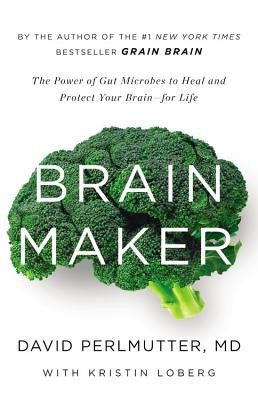
- The gut-brain axis is real and well mapped. «Brain Maker» is not a book about the gut-brain axis; it is a book about curing Alzheimer’s, autism, ADHD, depression and MS with yogurt, coconut oil and gluten avoidance.
- No microbiome intervention has ever prevented or reversed a brain disease in a human. Eleven years after publication, that sentence still holds.
- The autism chapter has aged worst: the largest dataset found the causal arrow runs backwards — restricted eating shapes the microbiome, not the reverse.
- The famous 10:1 bacteria-to-human-cell ratio the book leans on is wrong. The real number is about 1.3:1.
- We previously presented the fermented-food trial as settled. It is not. A larger randomized trial failed to reproduce it — and that replication attempt is a 2025 preprint that has not been peer-reviewed. Both facts belong in the same sentence.
Verdict
Skip it. The descriptive half of «Brain Maker» (gut bacteria talk to the brain through vagal, immune and metabolite routes) was correct in 2015 and is textbook now. You can get it free and better from Cryan et al., Physiological Reviews, 2019, a review that maps the same pathways without promising anything. The therapeutic half (that you can reshape those bacteria with a specific diet and prevent or reverse neurodegeneration) has had a decade of testing and has not produced a single human disease prevented or reversed.
The book is not fringe nonsense. That is precisely the problem with it. It takes a real mechanism, runs it through mouse studies and case anecdotes, and arrives at clinical certainty that the mechanism does not support. Every claim in it that could be tested has now been tested. Most failed.
The claim on trial
Perlmutter’s thesis, stated plainly: the composition of your gut microbiome is a causal and modifiable determinant of brain disease. Modern life (antibiotics, C-sections, gluten, sugar, low fat) has wrecked it. Reshaping it through carbohydrate and gluten avoidance, high fat intake, fermented foods and probiotics can prevent, halt or reverse Alzheimer’s, autism, ADHD, depression, anxiety and multiple sclerosis.
That is a causal chain with four links: microbiome differences exist in disease; the differences come first; changing the microbiome changes the disease; and the specific diet prescribed does the changing. The book treats all four as established. Test them separately and they come apart at different points.
One detail sets the tone. The book repeats the claim that bacterial cells outnumber human cells 10 to 1 — a figure that had already been circulating for forty years on the strength of a single back-of-envelope estimate. A careful recount put the ratio at roughly 1.3:1 (Sender et al., PLoS Biology, 2016), published one year after «Brain Maker». Not fatal to the argument, but it tells you where the sourcing standard sat.
What survived
The axis itself. Gut bacteria produce and modulate neuroactive compounds, signal along the vagus nerve, shape microglial development and influence systemic inflammation. Cryan et al., Physiological Reviews, 2019 catalogues the routes in detail. In 2015 this was a live area a general reader had not heard of; the book brought it to a large audience and that was worth doing.
Probiotics for mood have partial support — with heavy caveats. A meta-analysis of 23 randomized trials in 1,401 clinically diagnosed patients found probiotics reduced depression symptoms (SMD -0.96) and anxiety (SMD -0.59), while prebiotics did nothing at all (Asad et al., Nutrition Reviews, 2025). Heterogeneity was high, which means the pooled number hides trials pointing in different directions. Read as adjunctive symptom relief in people already in treatment, this is a real finding. Read as proof that depression is a gut disease, it is not.
Whole grains (which the book tells you to cut) track with slower cognitive decline. Higher intake was associated with better preservation of memory and global cognition over follow-up (Liu et al., Neurology, 2023). Observational, so confounded, but it points the opposite direction from the prescription.
And C-section does alter the newborn gut. Shao et al., Nature, 2019 found stunted transmission of maternal Bacteroides and more opportunistic pathogen colonization in caesarean-born infants. The differences largely resolved by weaning, and no neurological consequence was established. The mechanism the book invokes exists. The outcome it promises does not follow.
What did not survive
Autism. This is the collapse. In the largest autism microbiome dataset assembled to that point, autism diagnosis showed essentially no direct microbiome signal once diet was accounted for; restricted and repetitive eating patterns driven by autistic traits explained the association (Yap et al., Cell, 2021). The arrow runs from autism to diet to microbiome, not the other way. A 2026 review went further and dismantled the three pillars the causal hypothesis rests on (case-control comparisons, mouse models and fecal transplant trials) finding all three conceptually and methodologically unsound, and calling the hypothesis a dead end (Mitchell et al., Neuron, 2026). Parents were told in 2015 that fixing the gut could change an autistic child. That was never supported and is now actively contradicted.
C-section as an autism cause. The population association was real and disappeared under sibling control: comparing siblings born by different modes, the link vanished — familial confounding, not microbial seeding (Curran et al., JAMA Psychiatry, 2015). That study was published the same year as the book.
Gluten as a brain toxin in people without celiac disease. A double-blind rechallenge in self-reported gluten-sensitive patients found no specific effect of gluten once FODMAPs were controlled — symptoms tracked the fermentable carbohydrates, not the protein (Biesiekierski et al., Gastroenterology, 2013). Published two years before «Brain Maker». On the cost side, roughly 110,000 people followed for 26 years showed no cardiovascular benefit from gluten avoidance, and the authors noted that avoiding gluten means avoiding whole grains (Lebwohl et al., BMJ, 2017).
Probiotics as reliable colonizers. An 11-strain commercial probiotic was tracked by direct mucosal biopsy rather than stool. It colonized the gut lining in only a subset of people; most were resisters, and stool shedding created a false impression of engraftment in everyone (Zmora et al., Cell, 2018). The companion study found that taking probiotics after antibiotics delayed the return of the native microbiome for up to five months, while autologous fecal transplant restored it within days (Suez et al., Cell, 2018). The book’s post-antibiotic protocol may do the opposite of what it claims.
Diet as dementia prevention. The MIND diet (a plausible, well-designed brain-protective eating pattern) was tested in a 3-year randomized trial in older adults at risk. No significant cognitive difference versus the control diet (Barnes et al., NEJM, 2023). If a serious diet trial cannot move cognition in three years, a book-length dietary protocol promising to prevent Alzheimer’s is writing checks the field cannot cash.
Probiotics for existing cognitive impairment. Twelve trials in 852 patients with mild cognitive impairment or Alzheimer’s produced a modest improvement in cognitive scores (SMD 0.67), with the authors themselves describing the evidence base as limited (Mo et al., Medicina Clínica, 2024). Small score movements on short trials. No trial shows reversal.
The field’s own signal-to-noise problem. A pooled reanalysis of 10 obesity-microbiome studies found that classifying people by their microbiome performed barely better than chance, and that individual studies were badly underpowered (Sze & Schloss, mBio, 2016). If the microbiome cannot reliably distinguish obese from lean (the most-studied case) the confidence in the disease-specific claims was never earned. Gut-brain researchers themselves wrote a paper a year after the book, titled around the phrase «fecal phrenology», noting that many striking observations in the field had not been reproduced or had failed replication attempts (Forsythe et al., BMC Medicine, 2016). The people who built the field were more cautious than the person selling it.
What the book could not have known
Fairness requires separating what Perlmutter got wrong from what came later. Most of the evidence above postdates 2015: Yap 2021, Zmora and Suez 2018, Barnes 2023, Mitchell 2026. In 2015 you could have believed the causal story and been within the range of reasonable opinion. What was not reasonable was the certainty, and the promise of prevention.
The fermented-food question is the honest example of a field still moving — and we got it wrong here before. In a 10-week study of 36 adults, a fermented-food diet raised microbial diversity and lowered 19 inflammatory proteins including IL-6, while the high-fiber arm did not (Wastyk et al., Cell, 2021). An earlier version of this review presented that as settled. It is not. A larger randomized placebo-controlled trial in 147 adults over 8 weeks found no diversity difference in the fermented-food arm versus control, and increased immune-activation markers (CD5, CD6, CD8A and IL-18R1) rather than decreased inflammation (van den Belt et al., medRxiv, 2025). That replication attempt is a preprint. It has not been peer-reviewed, and it may change or fail to publish. The correct summary is not «fermented food lowers inflammation» and not «fermented food raises inflammation». It is: one small trial found one thing, one larger unreviewed trial found close to the opposite, and nobody currently knows. Correcting our own record here matters more than looking consistent — it is why we run book reviews this way.
Who should read it
Nobody who wants to know what the microbiome does — the Cryan review does that job properly. Nobody looking for a way to prevent Alzheimer’s, because there is nothing here that survived a randomized trial. Nobody with an autistic child, for the reasons in Yap and Mitchell.
Two narrow audiences: people studying how a real mechanism gets converted into a commercial health protocol, for whom this is a clean specimen; and readers who have already adopted the protocol and want to see which parts have since failed. If you belong to the second group, read the failures section above and skip the book.
If the pattern interests you more than the topic, «Why We Sleep» is the same move in sleep science, and «Making the Brain Body Connection» is what it looks like when the mechanism was never real to begin with.
One thing to try
Eat more whole grains, not fewer. This is the one action here with a defensible evidence base pointing the same direction on two outcomes: higher whole-grain intake tracked with slower cognitive and memory decline (Liu et al., Neurology, 2023), and 26 years of follow-up in about 110,000 people found no cardiovascular case for cutting gluten while noting that gluten avoidance reduces whole-grain intake (Lebwohl et al., BMJ, 2017). It costs nothing, requires no supplement, and is the direct inverse of the book’s central instruction. If you have celiac disease, none of this applies to you and your existing diet stands.
Get the book
Find «Brain Maker» on Amazon — as an Amazon Associate, The Boring Work earns from qualifying purchases (disclosure).
The boring bottom line
Gut bacteria influence the brain. That is established. Whether you can steer that influence deliberately, in a specific person, toward a specific disease outcome, is a separate question — and after a decade of trials the answer remains no. Not for Alzheimer’s, not for autism, not for MS. Probiotics may help depression symptoms alongside treatment. Whole grains may help cognition. Neither of those is «Brain Maker»’s argument; one of them contradicts it.
The pattern to take from this book is more useful than its content: a genuine mechanism, mouse data, patient anecdotes, and then a leap to clinical prescription that the mechanism never authorized. When the field’s own researchers publish a paper using the phrase «fecal phrenology» about their own literature, and a popular book about the same literature promises to heal and protect your brain for life, believe the researchers.
When to see a professional
This article is general information about a book and the published literature. It is not medical advice, it is not a diagnosis, and it is not a substitute for a clinician who can examine you.
See a doctor if you have persistent gut symptoms — bloating, pain, changes in bowel habit lasting weeks, blood in stool, unexplained weight loss. Celiac disease is diagnosed by testing, and testing requires you to still be eating gluten, so do not start a gluten-free diet before being assessed. See a doctor about memory or thinking changes that you or people close to you have noticed over months, rather than assuming diet will handle it; some causes of cognitive decline are treatable and time matters. See a doctor or a mental health professional for depression or anxiety that persists for more than two weeks or interferes with work, sleep or relationships. Do not start, stop or change any prescribed treatment based on a book or on this article — that decision belongs to you and your clinician.
Sources
- Mitchell, K. J., Dahly, D. L., & Bishop, D. V. M (2026). Conceptual and methodological flaws undermine claims of a link between the gut microbiome and autism. Neuron. 114(2), 196-211 doi:10.1016/j.neuron.2025.10.006
- Yap, C. X., et al (2021). Autism-related dietary preferences mediate autism-gut microbiome associations. Cell. 184(24), 5916-5931 doi:10.1016/j.cell.2021.10.015
- Barnes, L. L., et al (2023). Trial of the MIND Diet for Prevention of Cognitive Decline in Older Persons. New England Journal of Medicine. 389, 602-611 doi:10.1056/NEJMoa2302368
- Zmora, N., et al (2018). Personalized Gut Mucosal Colonization Resistance to Empiric Probiotics. Cell. 174(6), 1388-1405 doi:10.1016/j.cell.2018.08.041
- Suez, J., et al (2018). Post-Antibiotic Gut Mucosal Microbiome Reconstitution Is Impaired by Probiotics and Improved by Autologous FMT. Cell , 174(6), 1406-1423. Cell. doi:10.1016/j.cell.2018.08.047
- Wastyk, H. C., et al (2021). Gut-microbiota-targeted diets modulate human immune status. Cell. 184(16), 4137-4153 doi:10.1016/j.cell.2021.06.019
- van den Belt, M., et al (2025). Distinct modulatory effects of high-fiber and fermented-food diets on gut microbiota, immune function, transit time, and sleep quality. medRxiv. (preprint, not peer-reviewed) doi:10.1101/2025.08.05.25332853
- Sender, R., Fuchs, S., & Milo, R (2016). Revised Estimates for the Number of Human and Bacteria Cells in the Body. PLoS Biology. 14(8), e1002533 doi:10.1371/journal.pbio.1002533
- Curran, E. A., et al (2015). Association Between Obstetric Mode of Delivery and Autism Spectrum Disorder: A Population-Based Sibling Design Study. JAMA Psychiatry. 72(9), 935-942 doi:10.1001/jamapsychiatry.2015.0846
- Shao, Y., et al (2019). Stunted microbiota and opportunistic pathogen colonization in caesarean-section birth. Nature. 574, 117-121 doi:10.1038/s41586-019-1560-1
- Biesiekierski, J. R., et al (2013). No Effects of Gluten in Patients With Self-Reported Non-Celiac Gluten Sensitivity After Dietary Reduction of Fermentable, Poorly Absorbed, Short-Chain Carbohydrates. Gastroenterology. 145(2), 320-328 doi:10.1053/j.gastro.2013.04.051
- Lebwohl, B., et al (2017). Long term gluten consumption in adults without celiac disease and risk of coronary heart disease: prospective cohort study. BMJ. 357, j1892 doi:10.1136/bmj.j1892
- Liu, X., et al (2023). Association of Whole Grain Consumption and Cognitive Decline. Neurology. 101(20) doi:10.1212/WNL.0000000000207938
- Forsythe, P., Kunze, W., & Bienenstock, J (2016). Moody microbes or fecal phrenology: what do we know about the microbiota-gut-brain axis? BMC Medicine , 14, 58. BMC Medicine. doi:10.1186/s12916-016-0604-8
- Sze, M. A., & Schloss, P. D (2016). Looking for a Signal in the Noise: Revisiting Obesity and the Microbiome. mBio. 7(4), e01018-16 doi:10.1128/mBio.01018-16
- Asad, A., et al (2025). Effects of Prebiotics and Probiotics on Symptoms of Depression and Anxiety in Clinically Diagnosed Samples. Nutrition Reviews. 83(7), e1504-e1520 doi:10.1093/nutrit/nuae177
- Mo, R., et al (2024). Effect of probiotics on cognitive function in adults with mild cognitive impairment or Alzheimer's disease. Medicina Clínica. 162(12), 565-573 doi:10.1016/j.medcli.2024.01.013
- Cryan, J. F., et al (2019). The Microbiota-Gut-Brain Axis. Physiological Reviews. 99(4), 1877-2013 doi:10.1152/physrev.00018.2018