TL;DR
- The direction is right and the arithmetic is wrong. Short sleep is bad for you; it is not bad for you in the way the book says.
- The cancer claim (the most repeated line from this book) failed a meta-analysis of 65 studies and more than 1.5 million people.
- The heart-attack claim did the opposite. It passed a genetic causal test in 461,347 people. Walker was right about that one and gets credit for it almost nowhere.
- «The number of people who can survive on six hours of sleep or less, rounded to a whole number, is zero» is false. Two genes do exactly this, one identified two years after the book came out.
- The axis the book missed entirely: how regular your sleep is now predicts death better than how long it is.
Verdict
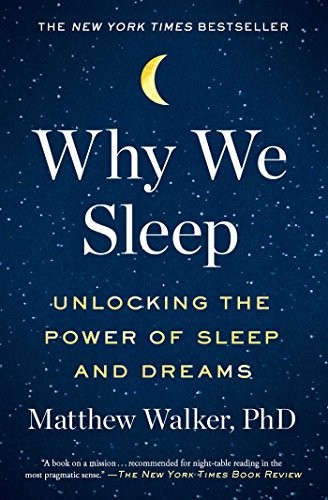
Skip the book, keep the conclusion. «Why We Sleep» (2017) is the most influential sleep book ever written and the one most in need of a correction sheet. Its central public-health message (most adults need seven hours or more, and modern life is bad at delivering them) is supported. But the book buys its urgency by straightening curves, dropping data points, and stating as a law what the evidence shows as a valley.
That matters more here than it would in another book. A reader cannot tell, from the text, which claims are load-bearing evidence and which are rhetoric. Both arrive in the same confident voice. This page is the correction sheet. The same verdict-first method runs across our book verdicts.
The claim on trial
«The shorter your sleep, the shorter your life span.» That is the thesis, stated as a law rather than a tendency. Two corollaries carry the book’s alarm: that sleeping under six or seven hours «more than doubl[es] your risk of cancer», and that the number of adults who function on less, rounded to a whole number, is zero.
Three claims, all falsifiable, all testable against work published since 2017. Here is how each did.
What survived
Short sleep and heart attack: causal, not merely correlated. The strongest post-publication result runs in Walker’s favour and almost nobody reports it. In 461,347 UK Biobank participants, short sleepers had 20% higher myocardial infarction risk, and Mendelian randomization (which uses inherited genetic variants as a natural experiment) was consistent with a causal effect rather than a confounded association (Daghlas et al., JACC, 2019).
Short sleep and dementia. Sleeping six hours or less at ages 50 and 60 predicted higher dementia incidence across 25 years of follow-up in the Whitehall II cohort, hazard ratio 1.22 at age 70 (Sabia et al., Nature Communications, 2021). Note the reference category: seven hours, not eight.
The immune claim, narrowed. Short sleep around a vaccination does reduce antibody response — but the pooled effect was robust in men and not statistically significant in women (Spiegel et al., Current Biology, 2023). «Demolishes your immune system» is not what this evidence says. Something real is there, and it is smaller and more specific than the sentence you remember.
Seven hours or more, as a floor. The professional consensus the book helped popularise is intact (Watson et al., Journal of Clinical Sleep Medicine, 2015). Seven, not eight.
What did not survive
«The shorter your sleep, the shorter your life span» — as a law. The relationship is a valley, not a slope. Pooling 16 prospective cohorts, short sleep carried a relative mortality risk of about 1.12 and long sleep about 1.30 — long sleep was the worse of the two (Cappuccio et al., SLEEP, 2010). Dose-response modelling puts the minimum near seven hours with risk rising on both sides (Yin et al., JAHA, 2017). In 322,721 adults across four Asian countries, seven hours was the nadir and the largest hazard sat at ten hours or more — 1.34 in men, 1.48 in women (Svensson et al., JAMA Network Open, 2021). Brain imaging gives the same shape: both too little and too much sleep track with worse cognition, worse mental health and lower grey-matter volume, optimum around seven (Li et al., Nature Aging, 2022).
A monotonic law and a U-shaped curve are not the same statement. Only one of them is in the data.
«More than doubling your risk of cancer.» Across 65 studies and over 1.5 million participants, neither short nor long sleep duration was associated with overall cancer risk (Chen et al., BMC Cancer, 2018). A genetic causal analysis in roughly 157,000 UK Biobank women plus 123,000 breast-cancer cases found support for morning chronotype as protective, and imprecise, non-supportive estimates for sleep duration (Richmond et al., BMJ, 2019). The cancer signal, where it exists, is about circadian timing, not hours slept.
«Rounded to a whole number, that number is zero.» A point mutation in DEC2 produces familial natural short sleep of about 6.25 hours with no evident impairment, and reproduces the phenotype when engineered into mice (He et al., Science, 2009). A variant in ADRB1 does the same at about 5.7 hours (Shi et al., Neuron, 2019) — published two years after the book. These people are rare. They are not zero, and the absolutism was already unsafe when it was written.
«The WHO has declared a sleep loss epidemic.» No such declaration is traceable to the WHO. The underlying premise is also weak: a review of 168 studies across 15 countries found no consistent decline in adult sleep duration over more than fifty years (Youngstedt et al., Sleep Medicine Reviews, 2016).
The athlete injury graph. The book’s redrawn chart of sleep and adolescent sports injuries omits the five-hour column that appears in the source study — the column that breaks the clean trend (Milewski et al., Journal of Pediatric Orthopaedics, 2014). A monotonic picture was produced from non-monotonic data.
What the book could not have known, and what should now displace it
Since 2017 the field has moved the question. Across roughly 60,000 UK Biobank participants wearing accelerometers, night-to-night sleep regularity predicted all-cause, cardiometabolic and cancer mortality more strongly than sleep duration did (Windred et al., SLEEP, 2024).
If you take one operational instruction from this page rather than from the book, take that one. Going to bed and getting up at the same time is a lever you control. Adding an hour you do not have is not.
One item on the author
In 2020 Walker’s 2019 Neuron article «A societal sleep prescription» was retracted for verbatim reuse of text from his own 2018 Lancet piece (retraction notice, Neuron, 2020). This does not touch the sleep science. It does bear on how much unverified trust a reader should extend to a single confident narrator, which is the whole problem with this book.
Who should read it
Read the full book if you want the history and the phenomenology. The chapters on dreaming and on what sleep does to memory are good writing, and the overclaiming does not live there.
Skip it if you want to know what is true. You will not be able to separate the two while reading, and this page exists because that separation took fifteen peer-reviewed papers.
Two neighbours on this site: «Brain Maker» shows the same failure mode in nutrition, a real mechanism pushed to clinical certainty, and «Personal Development for Smart People» covers what happened when someone tried to sleep two hours a night on purpose.
One thing to try
Fix your wake time for two weeks. The same clock time, seven days a week, including the weekend. Change nothing else — not caffeine, not screens, not bedtime. Regularity is the variable with the strongest recent evidence behind it, and the only one you can set by decision rather than by hope.
If you still cannot fall asleep after that, the treatment with a guideline behind it is cognitive behavioural therapy for insomnia, not a longer time in bed (Edinger et al., Journal of Clinical Sleep Medicine, 2021).
Get the book
Find «Why We Sleep» on Amazon — as an Amazon Associate, The Boring Work earns from qualifying purchases (disclosure).
One sleep technique that circulates entirely outside this literature has its own audit: the military sleep method and its missing six weeks.
The boring bottom line
Walker was right that sleep matters and wrong about how. The correct summary of two decades of data is duller than his: aim for about seven hours, keep the timing steady, and stop treating the eighth hour as a moral obligation. That sentence sells no books. It is what the evidence says.
When to see a professional
This article is general information, not medical advice, and nothing here diagnoses or treats any condition. See a doctor if you snore loudly and wake gasping or unrefreshed, which can signal sleep apnea, or if you have trouble sleeping most nights for three months or more. For chronic insomnia, cognitive behavioural therapy for insomnia is the recommended first-line treatment, ahead of sleeping pills. We give no medication advice.
Sources
- Watson, N. F., et al (2015). Recommended Amount of Sleep for a Healthy Adult: A Joint Consensus Statement of the AASM and Sleep Research Society. Journal of Clinical Sleep Medicine. 11(6), 591–592 doi:10.5664/jcsm.4758
- Cappuccio, F. P., et al (2010). Sleep Duration and All-Cause Mortality: A Systematic Review and Meta-Analysis of Prospective Studies. SLEEP. 33(5), 585–592 doi:10.1093/sleep/33.5.585
- Yin, J., et al (2017). Relationship of Sleep Duration With All-Cause Mortality and Cardiovascular Events. Journal of the American Heart Association. 6(9), e005947 doi:10.1161/JAHA.117.005947
- Svensson, T., et al (2021). Association of Sleep Duration With All- and Major-Cause Mortality Among Adults in Japan, China, Singapore, and Korea. JAMA Network Open. 4(9), e2122837 doi:10.1001/jamanetworkopen.2021.22837
- Li, Y., et al (2022). The Brain Structure and Genetic Mechanisms Underlying the Nonlinear Association Between Sleep Duration, Cognition and Mental Health. Nature Aging. 2, 425–437 doi:10.1038/s43587-022-00210-2
- Chen, Y., et al (2018). Sleep Duration and the Risk of Cancer: A Systematic Review and Meta-Analysis Including Dose-Response Relationship. BMC Cancer. 18, 1149 doi:10.1186/s12885-018-5025-y
- Richmond, R. C., et al (2019). Investigating Causal Relations Between Sleep Traits and Risk of Breast Cancer in Women: Mendelian Randomisation Study. BMJ. 365, l2327 doi:10.1136/bmj.l2327
- Daghlas, I., et al (2019). Sleep Duration and Myocardial Infarction. Journal of the American College of Cardiology. 74(10), 1304–1314 doi:10.1016/j.jacc.2019.07.022
- Sabia, S., et al (2021). Association of Sleep Duration in Middle and Old Age With Incidence of Dementia. Nature Communications. 12, 2289 doi:10.1038/s41467-021-22354-2
- Spiegel, K., et al (2023). A Meta-Analysis of the Associations Between Insufficient Sleep Duration and Antibody Response to Vaccination. Current Biology. 33(5), 998–1005.e2 doi:10.1016/j.cub.2023.02.017
- He, Y., et al (2009). The Transcriptional Repressor DEC2 Regulates Sleep Length in Mammals. Science. 325(5942), 866–870 doi:10.1126/science.1174443
- Shi, G., et al (2019). A Rare Mutation of β1-Adrenergic Receptor Affects Sleep/Wake Behaviors. Neuron. 103(6), 1044–1055 doi:10.1016/j.neuron.2019.07.026
- Youngstedt, S. D., et al (2016). Has Adult Sleep Duration Declined Over the Last 50+ Years? Sleep Medicine Reviews , 28, 69–85. Sleep Medicine Reviews. doi:10.1016/j.smrv.2015.08.004
- Milewski, M. D., et al (2014). Chronic Lack of Sleep Is Associated With Increased Sports Injuries in Adolescent Athletes. Journal of Pediatric Orthopaedics. 34(2), 129–133 doi:10.1097/BPO.0000000000000151
- Windred, D. P., et al (2024). Sleep Regularity Is a Stronger Predictor of Mortality Risk Than Sleep Duration. SLEEP. 47(1), zsad253 doi:10.1093/sleep/zsad253
- Walker, M. P (2020). Retraction Notice to: A Societal Sleep Prescription. Neuron. 107(2), 388 doi:10.1016/j.neuron.2020.07.003
- Edinger, J. D., et al (2021). Behavioral and Psychological Treatments for Chronic Insomnia Disorder in Adults: An AASM Clinical Practice Guideline. Journal of Clinical Sleep Medicine. 17(2), 255–262 doi:10.5664/jcsm.8986