
What is energy? Who are energetic people?
Simply put, energy is the desire and the ability to do something. A fuller definition: energy is the information flow of harmonious existence and development.
How can we preserve and multiply our energy?
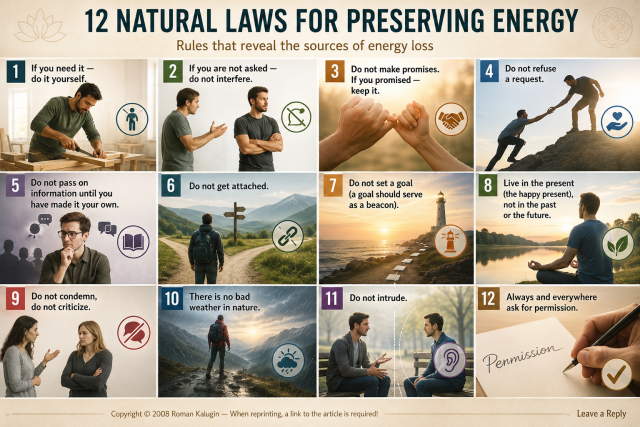
There are 12 natural laws, rules that reveal the sources of energy loss. They were formulated by the yoga guru Ar Santem.
1. If you need it — do it yourself.
What is the point of doing something that brings no benefit at all to you? The result of our activity should be at least gratitude or a sense of self-worth. Energy is always a reward for something. If others dump their worries onto us, we will never gain proper satisfaction from doing their work, and therefore no inspiration for new work.
2. If you are not asked — do not interfere.
Often, guided by good intentions, we try to influence other people’s choices, their thinking and their actions. As one might expect, most often we receive no gratitude in return, but rather condemnation. It is impossible to learn from someone else’s mistakes; everyone walks their own path in their own way.
3. Do not make promises. If you promised — keep it.
Do we really become freer and richer by handing out promises? And if we fail to keep them, does that lower our reputation only in someone else’s eyes? Or in our own as well?
4. Do not refuse a request.
When we are asked for something, it implies gratitude for performing a certain service. This gratitude helps us feel our own worth, which serves as an inner source of the energy of self-respect.
5. Do not pass on information until you have made it your own.
Be careful when you reveal your goals and plans to others. Their sometimes absurd remarks or down-to-earth reasoning may clip your wings, and your goals will lose their former significance. Do not advise others to do something you have not yet tried yourself. If your word is always grounded in your own experience, people will value it.
6. Do not get attached.
It is obvious that when we become attached to just one thing, we slow down our development. If we keep treading in one place, we receive no new energy.
7. Do not set a goal (a goal should serve as a beacon).
A goal is not something you crash into; a goal is a direction of activity. If you see goals as some final destination, then upon reaching them you may feel emptiness. The best goals are endless ones — for example, the goal of self-development.
8. Live in the present (the happy present), not in the past or the future.
The energy granted today should be directed toward today. The best thing we can do about the past and the future can always be done only now.
9. Do not condemn, do not criticize.
The habit of criticizing is a sign of one’s own low self-esteem. By criticizing others, we provoke a negative reaction in return.
10. There is no bad weather in nature.
If we learn to see in failed attempts just one more option that has been tested and does not fit — but not the last possible one — and in difficult circumstances an environment for personal growth, then we will not waste energy on lamenting, but will move forward.
11. Do not intrude.
Speak when people are ready to listen to you. Do not impose yourself on people. Otherwise you will always get a zero positive result for yourself, and you will also waste energy in vain.
12. Always and everywhere ask for permission.
Show respect for other people’s property, both intellectual and physical. Otherwise, be prepared to spend energy on excuses.
Leave a Reply
You must be logged in to post a comment.